
Composite Bonding vs. Porcelain Veneers: How to Choose for Your London Smile
Composite bonding has become one of the most-talked-about cosmetic dental treatments in the UK in the last few years. Walk past any London dental practice window, scroll through Instagram, or open TikTok for ten minutes, and you will encounter dramatic before-and-after transformations promising a new smile in a single afternoon. Porcelain veneers — the older, more established option — sit alongside it in the conversation, often presented as if the two are essentially interchangeable.
They are not. Composite bonding and porcelain veneers are different treatments with different strengths, different lifespans, different costs, and different ideal patients. The right answer for one person is genuinely wrong for another, and the practice that recommends the same option to every patient who walks in is selling rather than assessing.
This article is a decision framework, not a recommendation. It explains what each treatment actually is, what each is good and bad at, who each works well for, and the questions to ask yourself before you commit to either. By the end you should have a clear sense of which direction your case points — and the confidence to walk into any London consultation knowing what to ask for.
The short answer: which is right for whom
If you only read this section, here is the framework.
Composite bonding is often the right choice for
- Small chips, gaps, or edge irregularities affecting one or two teeth
- Single-tooth corrections where matching the surrounding teeth is the goal
- Younger patients who want to test the look before committing to a permanent solution
- Budget-constrained cases where the upfront cost matters most
- Patients who want a more reversible option with minimal change to natural tooth structure
Porcelain veneers are often the right choice for
- Multi-tooth aesthetic transformations across the front smile
- Patients committed to a long-term result who do not want frequent maintenance
- Cases involving significant discoloration that does not respond to whitening
- Patients whose bite forces and habits are compatible with porcelain
- Patients who want the most natural-looking long-term result and accept the higher upfront investment to achieve it
Sometimes neither is right
If your concern is yellowing of otherwise-healthy teeth, professional whitening may achieve what you want without any tooth modification at all. If your concern is crooked teeth, Spark Aligners or another orthodontic approach can correct the underlying alignment rather than masking it with veneers. A practice worth choosing will tell you when the right answer is something other than the treatment you came in asking about.
What composite bonding actually is
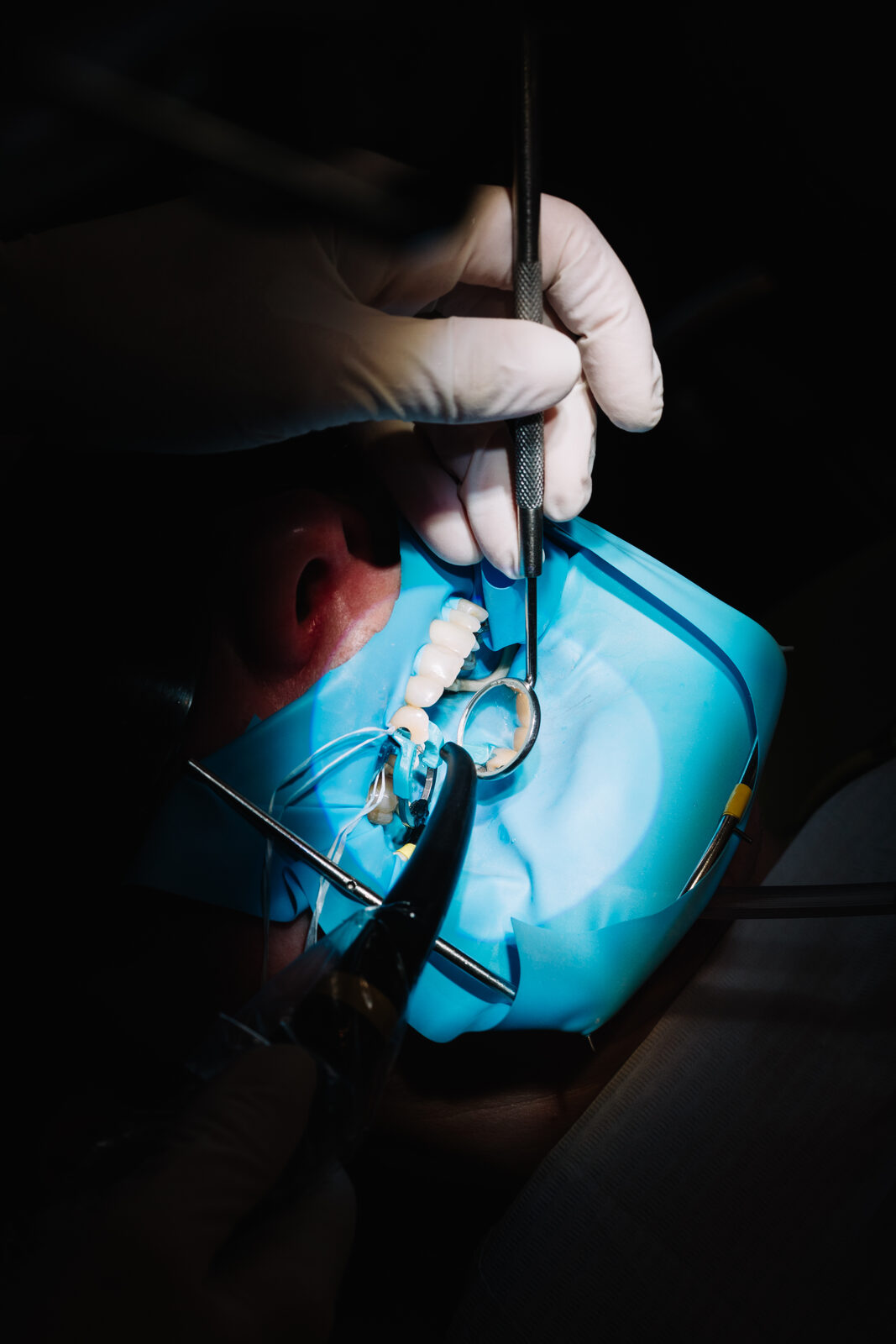
Composite bonding uses a tooth-coloured resin that is applied directly to the tooth by hand, sculpted into shape by the clinician, hardened with a curing light, and polished. The whole process happens chairside in a single appointment, with no laboratory involvement and no waiting period.
The composite material itself is the same family of resin used in white fillings, refined for cosmetic application. It bonds to your natural enamel through a chemical adhesive process, which is why preserving healthy enamel matters — composite’s bond to enamel is excellent; its bond to dentine is meaningfully weaker.
One of composite’s genuine advantages is that it usually requires little or no preparation of the underlying tooth. In many cases, the natural tooth is simply cleaned and lightly etched before the composite is applied. This means composite is largely additive rather than subtractive — you are putting material onto the tooth rather than removing it. For patients who care about preserving natural tooth structure, that matters.
Composite’s limitations are real. It stains over time, particularly with coffee, tea, wine, and smoking. It is less translucent than enamel or high-quality porcelain, which means it can look slightly less natural in certain lighting. It wears down under bite forces, particularly along the edges of front teeth that contact during eating and biting. And it typically lasts five to seven years before needing significant repolishing or replacement, which is a meaningful maintenance commitment.
What porcelain veneers actually are
Porcelain veneers are made by a dental laboratory from impressions or 3D scans of your prepared teeth, then bonded into place at a separate appointment from when they are designed. The process typically takes two to three appointments minimum and several weeks from start to finish. The veneer itself is a thin shell of porcelain, often around half a millimetre thick, custom-shaped to your tooth and matched to the surrounding natural teeth. We cover the full lifespan picture in our companion article on how long porcelain veneers last, but here are the headlines for this comparison.
Porcelain veneers usually require some preparation of the underlying tooth — a thin shaving of enamel to make room for the veneer. The amount removed varies; minimal-preparation philosophy aims to preserve as much natural tooth as possible, while more aggressive approaches remove significantly more. Once the underlying tooth has been prepared, that change cannot be undone. Veneers can later be replaced; the prepared tooth structure cannot.
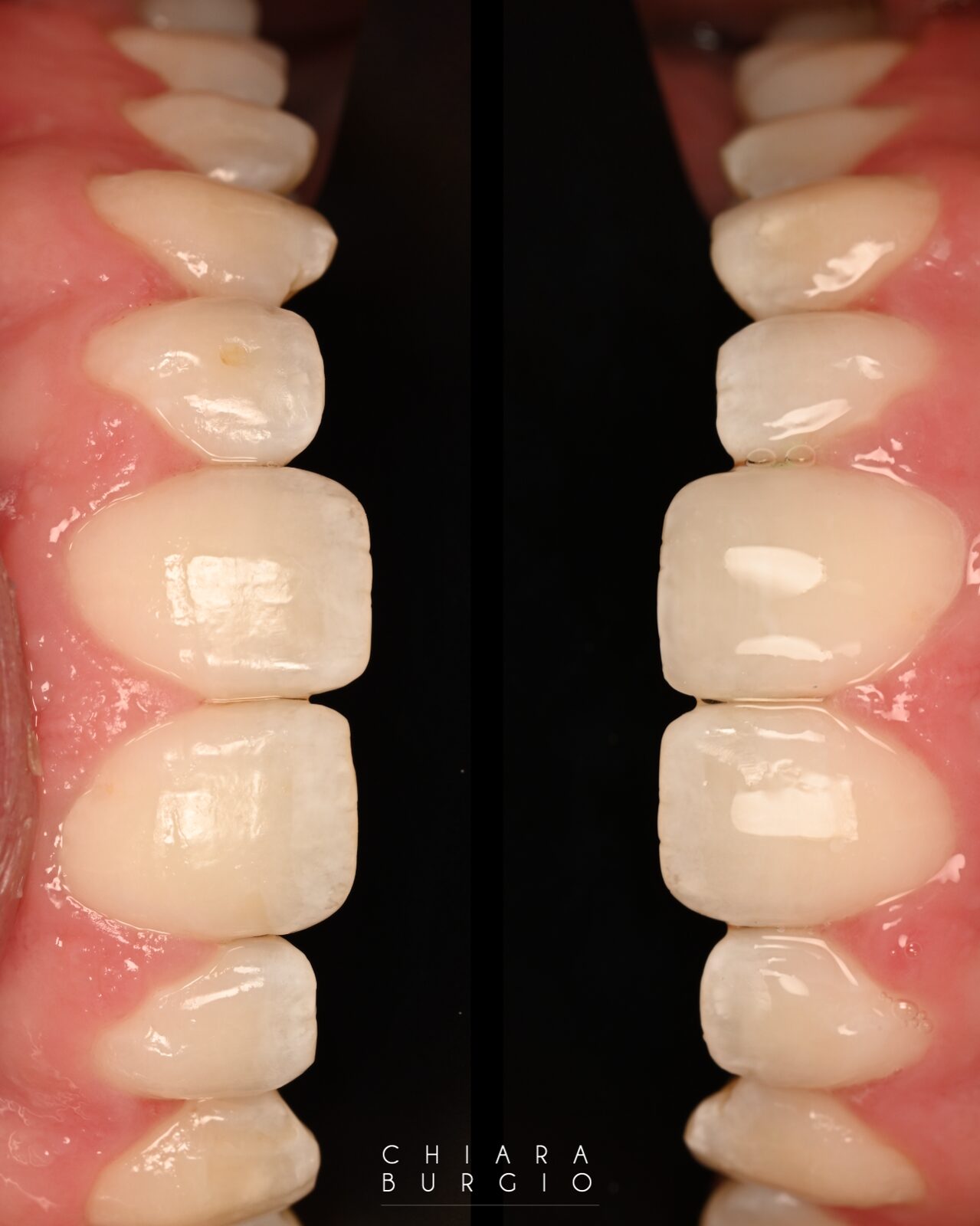
In return for that commitment, porcelain offers genuine advantages. It does not stain. It is more durable than composite under normal bite forces. It is more translucent and reflects light the way natural enamel does, making the long-term aesthetic result more natural. And it lasts substantially longer — typically ten to fifteen years or more, with many lasting twenty years.
The decision framework: nine questions to ask yourself
Before any consultation, working through these honestly gives you clarity that no clinician can provide for you. The right treatment depends on your answers.
1. What are you actually trying to fix?
A small chip on a single tooth is a different problem from a comprehensive smile transformation. Composite excels at small, specific corrections — a chip, a gap between two teeth, an uneven edge. Porcelain excels at coordinated multi-tooth transformations where the whole front smile needs to look intentional and matched. Knowing which scale you are working at is the most important question to answer first.
2. How many teeth need treatment?
One or two teeth often points toward composite. Four or more teeth almost always points toward porcelain, because matching multiple composite restorations consistently across a smile is genuinely difficult — the artistic skill required scales with the number of teeth, and small inconsistencies become visible. Porcelain laboratories produce more consistent results across multiple teeth because each veneer is designed in coordination with the others.
3. How committed are you to the result?
Composite is more reversible than porcelain. If you decide in two years that you do not like the look, composite can usually be removed without significant lasting effect on the underlying tooth. Porcelain requires preparation that cannot be reversed; once you have committed to porcelain, you have committed to having porcelain (or eventually a crown) on that tooth indefinitely. If you are uncertain about a major aesthetic change, composite is the lower-commitment way to test the look.
4. What is the state of your existing enamel?
Composite’s bond to healthy enamel is excellent; its bond to compromised tooth structure is weaker. Patients with intact, healthy enamel have a stronger argument for composite. Patients with significant existing wear, erosion, or previous restorations may be better served by porcelain, where the more substantial structure of the veneer compensates for what is missing underneath.
5. Do you grind or clench your teeth?
Bruxism is harder on composite than on porcelain. Both can fail under aggressive grinding without protection, but composite chips and wears faster. If you grind, you need a nightguard regardless — but if grinding is severe, that is an argument toward porcelain rather than composite, or in some cases an argument that aesthetic treatment should wait until the underlying parafunction is managed.
6. What is your maintenance tolerance?
Composite needs a polish every six to twelve months to keep it looking its best. Without polishing it dulls, picks up surface stain, and the difference between composite and the surrounding natural tooth becomes more visible. Porcelain needs essentially no maintenance beyond your regular hygiene visits. If you are someone who reliably attends six-monthly dental appointments and wants the option to refresh the look at each visit, composite is workable. If you want a treatment that you can largely forget about for fifteen years, porcelain fits better.
7. What are your staining habits?
Heavy coffee, tea, red wine, kombucha, smoking, or anything else that stains natural teeth will stain composite. The staining is largely surface and can be polished off, but the cycle of staining and polishing accelerates the wear of the composite. If your habits are heavy in this direction, porcelain’s stain resistance becomes a meaningful long-term advantage.
8. What is your budget — both upfront and long-term?
Composite is materially less expensive than porcelain at the time of placement — typically a fraction of the porcelain cost per tooth. The long-term math is closer than the upfront comparison suggests. Composite’s five-to-seven-year lifespan means at least one full replacement (and often more) within the time a single porcelain veneer would last. Add the maintenance polishing across those years, and the lifetime cost difference narrows. Composite is still cheaper over time for most patients, but not by as much as the headline price comparison implies.
9. Have you considered the alternatives?
This is the question every patient should ask before committing to either treatment. If your concern is purely the colour of your teeth, professional whitening may achieve what you want without any modification of the tooth at all. If your concern is alignment, orthodontic treatment can address the underlying position of the teeth. Sometimes a combination — whitening plus minor composite bonding, or alignment plus porcelain veneers on a single front tooth — produces a better result than committing to a more invasive single approach. The right cosmetic dentist will lay out these options before recommending any of them.
The composite bonding boom — what is driving it and what to be careful of
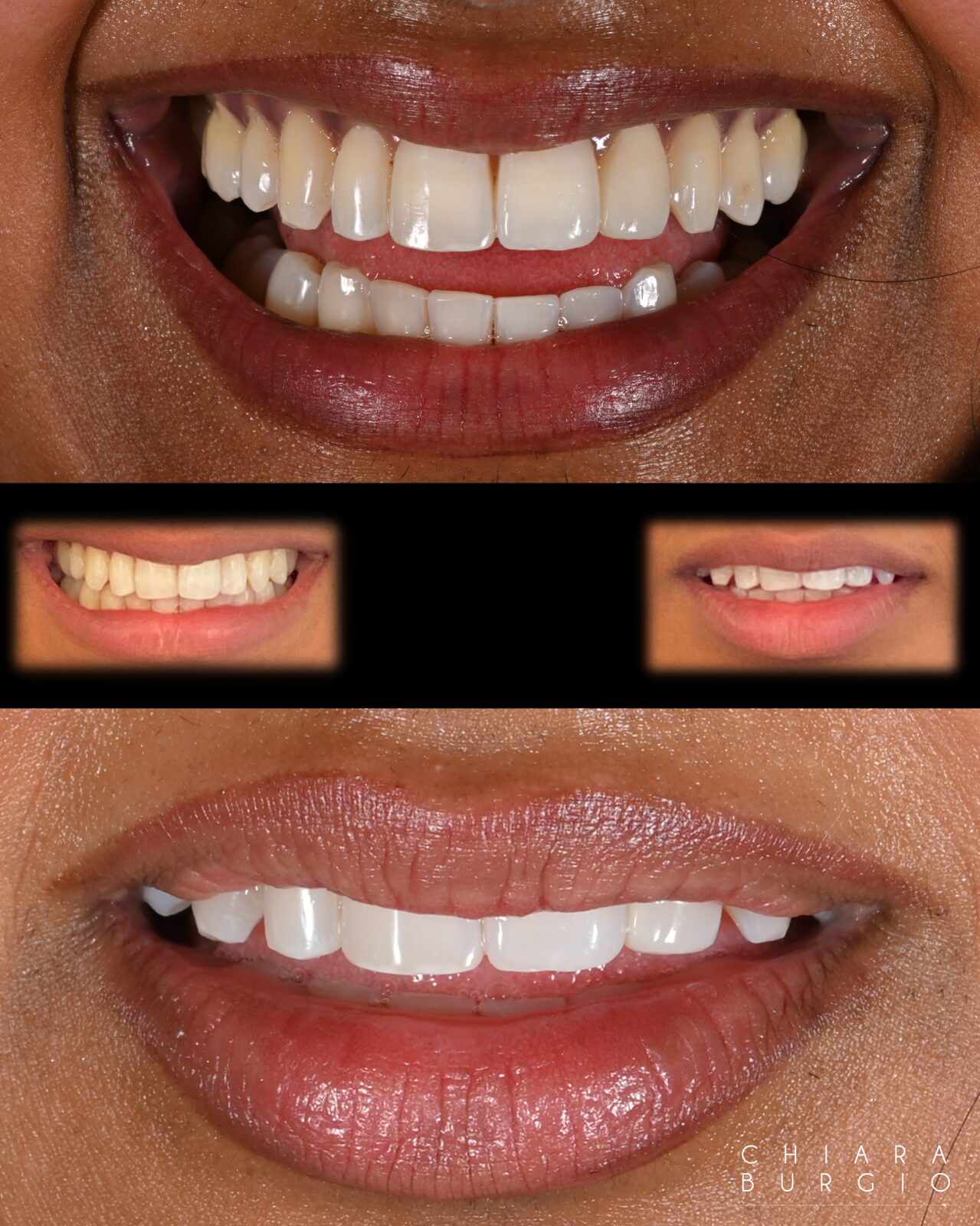
Composite bonding has had a major moment in UK cosmetic dentistry in the last several years. The drivers are not hard to identify. Single-day transformation videos on TikTok and Instagram make the treatment feel accessible and dramatic. The lower price point compared to porcelain makes it reachable for patients who would not have considered cosmetic dentistry otherwise. And “edge bonding” — small composite additions to even out the bottom edges of front teeth — has become a popular targeted intervention for relatively minor cosmetic concerns.
All of this is genuinely good news for patients with the right cases. Composite bonding done well, on the right teeth, by an experienced clinician, is an excellent treatment that delivers real value. But the boom has also produced some trends worth being cautious about.
Influencer-led practices
Some London practices have built their entire identity around social media presence rather than clinical depth. High volume, fast turnover, dramatic before-and-after content, and pricing structured to attract patients who would not have walked into a more traditional cosmetic practice. Some of these practices employ skilled clinicians and produce good work; others do not. The marketing presence is not a reliable signal of clinical quality, in either direction.
The dropout phenomenon
In the last few years we have seen a steady increase in patients arriving with composite bonding that needs to be redone. Some of it is normal end-of-life replacement after several years of wear. Some of it is poor original work — mismatched colour, rough margins, premature staining, debonding within months — that the patient is now seeking remedial intervention for. Remedial composite work is often more complex and expensive than the original work would have been if done well from the start, because the underlying tooth and the composite itself need to be assessed and repaired or replaced.
Aggressive composite that crosses into veneer territory
Some practices apply so much composite to so many teeth that it is effectively functioning as a composite veneer system — a full coverage transformation across the front smile. This is technically possible but rarely the best answer. At that scale, you have most of the disadvantages of composite (staining, wear, maintenance, shorter lifespan) and few of the advantages of porcelain. If a practice is recommending what is effectively a full smile composite transformation across eight to ten teeth, ask why composite is the right material for that scale of work rather than porcelain.
The “lasts forever” claim
Composite bonding does not last forever, and any practice claiming it does is being dishonest. The five-to-seven-year typical lifespan is a real, predictable feature of the material. A patient who is not told this upfront and then has to replace the work after five years can reasonably feel misled.
What good composite bonding looks like
Whatever practice you choose, here are the practical markers of composite bonding done properly.
- Honest assessment of whether composite is right for your case. A practice that recommends composite for every patient who asks, regardless of case complexity, is selling rather than assessing.
- No-prep or minimal-prep approach. One of composite’s main advantages is that it preserves natural tooth structure. A practice that aggressively prepares teeth for composite is throwing away that advantage.
- A clinician with significant composite experience. Composite work is an artistic skill, not just a technical one. The aesthetic result depends on the clinician’s eye for shape, colour matching, and surface texture. Years of focused composite experience matter — ask about it.
- A clear pre-treatment plan. What teeth, what shapes, what shade, what is and is not included in the price, what the maintenance schedule will be afterwards. In writing, taken home before any commitment.
- A maintenance plan discussed upfront. Six-to-twelve-month polishes, eventual replacement timeline, what staining habits to manage. If maintenance is not discussed, the practice is not setting you up for a good long-term outcome.
- Sensible numbers. Treating one or two teeth is a typical composite case. Treating four to six can be appropriate for some patients. Treating ten or more in a single afternoon is a red flag, regardless of how attractive the price.
What good porcelain veneer treatment looks like
We cover this in detail in our guide to porcelain veneer longevity, but the headline markers are: minimal-preparation philosophy that preserves natural tooth structure where possible, work made by a named, reputable laboratory, multi-appointment timeline rather than single-day transformation, a written treatment plan with clear inclusions and a wax-up or digital mock-up showing the planned outcome before commitment, and a clinician with substantial experience in this specific work.
A note on Behrens Dental’s approach
To be specific about what we offer: at Behrens Dental, both composite bonding and porcelain veneers are part of our cosmetic dentistry work, and we recommend the right one for each patient rather than defaulting to either. Some patients who come in asking about porcelain veneers leave with a recommendation for composite bonding because that is genuinely the right answer for their case. Others who come in asking about composite bonding leave with a recommendation for porcelain because their goals or circumstances point that way. And some leave with a recommendation for whitening, orthodontics, or a combined approach because those answer the underlying question better than either.
Dr Ole Behrens has a PhD in maxillofacial surgery and was an Assistant Professor in Prosthetics at the University of Kiel — prosthetics being the dental specialty most directly relevant to both composite and porcelain restorative work. The practice uses high-powered microscopes for precision in detection, diagnosis, and treatment, including in cosmetic work where the difference between excellent and adequate is often invisible to the naked eye but obvious under magnification.
Next steps
If you have worked through the nine questions above and still feel uncertain, that is a reasonable place to be — the right answer often only becomes clear with a clinical assessment. A consultation gives you that assessment: a clear view of your case, a recommendation grounded in your specific situation rather than a default answer, and the trade-offs laid out so you can decide on terms that make sense for you.
Whether you ultimately choose composite, porcelain, an alternative treatment, or no treatment at all, the goal of the consultation is to leave you with the information to make a confident decision. Aesthetic dentistry is a long-term commitment to your teeth. It deserves more than a single-day decision based on a social media transformation.