

Addressing Dental Anxiety with a Calm Welcoming Approach
It starts with a feeling many of us know all too well: the slight tightening in the chest, the restless tapping of a foot, or the lingering hesitation before dialing the phone number. For a significant portion of the population, the dental chair isn’t just a place for check-ups; it is a source of genuine, visceral stress. However, the narrative surrounding dentistry is shifting. It is no longer about “gritting your teeth and bearing it.” Instead, modern practice puts the person before the procedure.
For residents seeking expert dental care in Chelsea, the focus has evolved from purely clinical outcomes to a holistic experience where psychological comfort is prioritized alongside oral health. Understanding why we feel fear is the first step toward conquering it. By demystifying the process and reclaiming control, patients are discovering that a visit to the dentist can be a calm, empowering, and even positive part of their wellness routine.
The Anatomy of Anxiety: Validating Your Feelings
The first thing to understand is that your anxiety is valid. It is not a character flaw, nor is it “childish.” Dental anxiety often stems from a feeling of vulnerability. You are lying back, unable to speak clearly, with someone working in your personal space.
Psychologically, dental fear usually breaks down into four distinct categories:
- Fear of Pain: Often rooted in outdated childhood memories of dentistry before modern advancements.
- Fear of Loss of Control: The feeling of being “trapped” in the chair.
- Fear of Judgment: The worry that a dentist will scold you for neglected teeth or missed appointments.
- Sensory Overload: The sounds, smells, and vibrations associated with treatment.
Recognizing which of these triggers applies to you is a powerful tool. Once you identify the root cause, you can communicate it to your dental team, allowing them to tailor their approach to your specific needs.
The Nervous Patient’s Bill of Rights
To transform the dental experience from an endurance test into a partnership, we believe every patient should operate under a “Bill of Rights.” This mental framework helps shift the power dynamic back to you.
1. The Right to Stop (The Hand Signal Protocol)
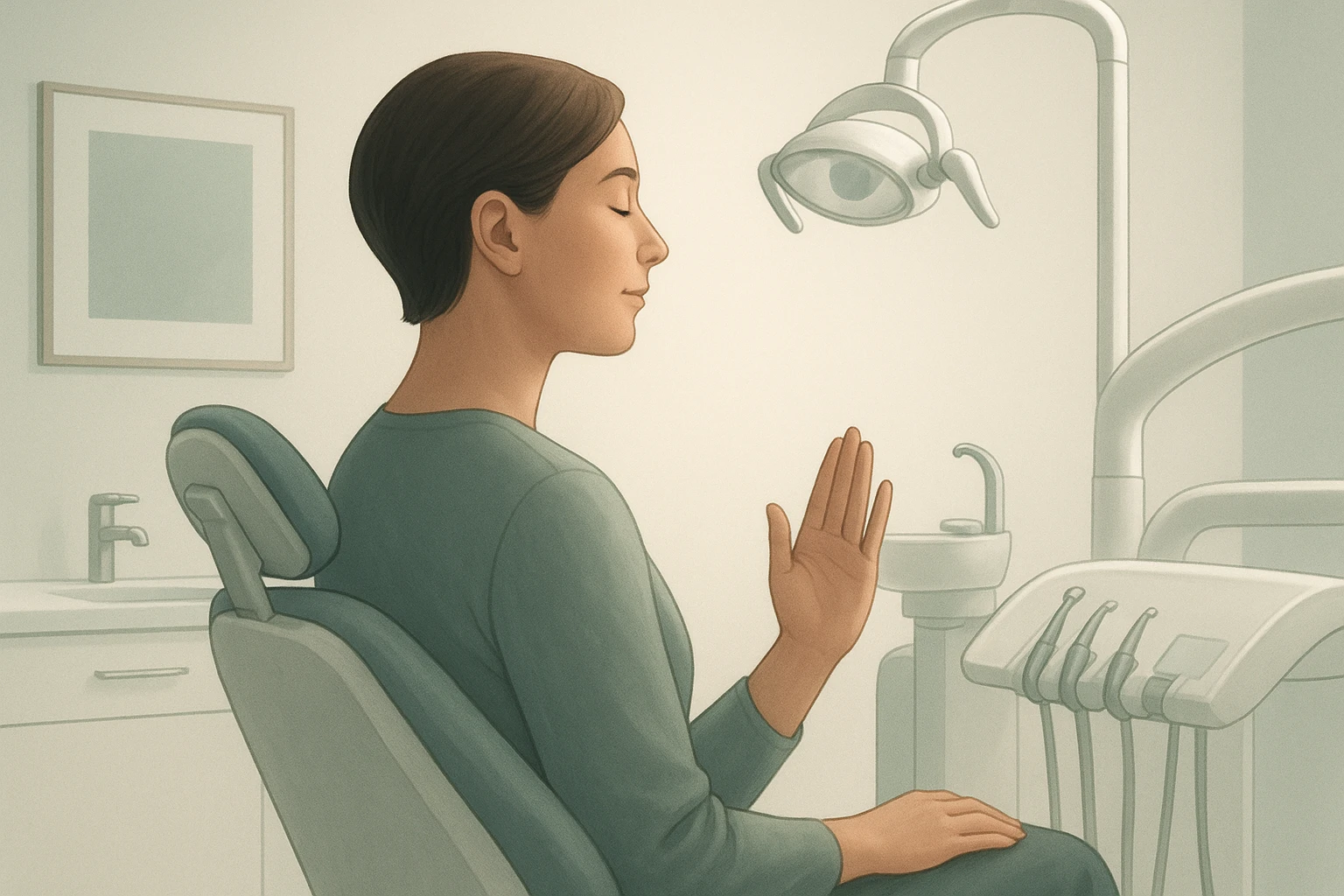
One of the most effective tools for managing anxiety is the “Stop Signal.” Before any treatment begins—even a simple cleaning—you establish a non-verbal cue with your dentist, usually raising your left hand.
- The Promise: If you raise your hand, treatment stops immediately. No questions asked.
- The Psychology: Knowing you have an “emergency brake” often reduces anxiety so significantly that patients rarely feel the need to use it. It turns a situation of helplessness into one of control.
2. The Right to Zero Judgment
Many patients avoid the dentist for years, not because of the drill, but because of the shame. They fear a lecture. A modern, patient-centric practice operates as a judgment-free zone. Whether it has been six months or six years since your last visit, the focus is entirely on the future, not the past. Your dental team is there to help you solve problems, not to critique your history.
3. The Right to Full Transparency
Fear of the unknown amplifies pain. You have the right to know exactly what is happening, explained in plain English, not medical jargon. This includes understanding the sensations you might feel (e.g., “cool water” or “slight pressure”) before they happen.
The Physiology of Fear: The Gag Reflex Connection
A common but rarely discussed aspect of dental anxiety is the gag reflex. Many patients believe they simply have a “sensitive throat,” but there is a profound physiological link between anxiety and gagging.
When you are nervous, your body enters a “fight or flight” mode. Your muscles tense up, including the muscles in your neck and throat. This tension makes the gag reflex significantly more sensitive. Furthermore, anxiety often causes patients to breathe through their mouths, which dries out the palate and further triggers the reflex.
The Solution: By focusing on relaxation techniques—such as deep nasal breathing and muscle relaxation—before treatment begins, we often see a dramatic reduction in the gag reflex. It is a clear example of how treating the mind helps treat the mouth.
Curating a “Chelsea Sanctuary” Environment
The physical environment plays a massive role in how your brain processes danger signals. If a practice smells like a hospital and sounds like a construction site, your anxiety will spike before you even sit down.
We believe a dental practice should feel more like a sanctuary than a clinic. This concept, often seen in advanced dental treatments in Chelsea, involves stripping away the clinical stressors:
- The Coffee Consultation: For new, nervous patients, the first interaction shouldn’t happen in the dental chair with a light in your eyes. It should happen in a consultation room, sitting upright, perhaps over a coffee, discussing your goals and fears face-to-face.
- Acoustic Management: Modern equipment is designed to be quieter. The high-pitched whine of the past is largely being replaced by low-vibration electric motors.
- Visual Distraction: The ability to watch a movie or listen to your own music acts as a “cognitive gate,” occupying your brain so it doesn’t hyper-focus on the procedure.
Technology That Whispers, Not Shouts
Technology has changed the game for nervous patients. It allows for treatments that are faster, quieter, and far less invasive than what many remember from decades ago.
The Magic of the Laser
For patients with gum health concerns, the fear of surgery is a major barrier. This is where innovations like the Duo-Lase™ come into play. As a non-surgical approach to treating periodontal disease, lasers use light energy to target bacteria and diseased tissue.
- Why it helps anxiety: There is often no cutting, no sutures, and significantly less noise. The healing time is faster, meaning less time worrying about recovery. When patients read Duo-Lase reviews, they often cite the “gentleness” of the procedure as a major surprise.
Precision Diagnostics
Fear often comes from uncertainty. Using high-powered microscopes allows dentists to see with incredible precision, ensuring that treatments are conservative—saving more natural tooth structure and preventing unnecessary work. This level of modern dental technology in London ensures that diagnostics are accurate, removing the “guesswork” that often makes patients uneasy.
The Spectrum of Support
While psychological support and a gentle touch are sufficient for many, we recognize that dental phobia exists on a spectrum. A “one size fits all” approach doesn’t work.
- TLC (Tender Loving Care): For mild anxiety. Extra time is booked, everything is explained slowly, and breaks are taken frequently.
- Inhalation Sedation: Often called “happy air,” this helps you feel relaxed and floaty, yet you remain fully awake and cooperative. It wears off minutes after the procedure.
- IV Sedation: For those with severe phobia or strong gag reflexes, intravenous sedation allows you to drift into a state of deep relaxation. You are conscious but unaware of the treatment, often remembering nothing afterward.
Frequently Asked Questions About Dental Anxiety
I’m embarrassed about my teeth. Will the dentist be shocked?
Dental professionals chose this career to help heal, not to judge. They have seen everything from simple cavities to complex trauma. Their primary emotion when seeing a patient with significant needs is usually satisfaction that they can now help that person get out of pain and smile again.
Can I bring a friend or family member with me?
Absolutely. Having a trusted person in the room during the consultation or waiting for you during treatment can provide a massive psychological safety net.
Does the “Stop Signal” really work?
Yes. It is a binding contract between you and your dentist. Testing it early in the appointment (raising your hand just to see if they stop) is a great way to build trust.
How do I make the first step?
You don’t need to commit to a root canal or an implant on day one. Your first step can simply be a conversation. Call the practice and mention you are a nervous patient. A good reception team will know exactly how to guide you through a low-stress introduction.
Taking the First Step Toward Confidence
Overcoming dental anxiety is a journey, not a switch you flip. It begins with finding a practice that views you as a partner rather than a set of teeth. By combining a “patient-first” philosophy with advanced, gentle technology, it is possible to rewrite your relationship with dentistry.
Whether you are looking to address long-standing periodontal concerns or simply want to get back on track with hygiene, you deserve an experience that respects your emotional well-being as much as your physical health. The path to a confident smile starts with a simple, judgment-free conversation.