

Live Bacteria Analysis Explains Gum Disease Activity
Have you ever been told you have “a bit of gum disease”? Perhaps you’ve noticed your gums bleeding when you brush, or you’ve undergone treatments that just don’t seem to provide lasting results. It’s a common and frustrating cycle for many. You follow the advice, you get the cleanings, but the problem lingers.
Here’s a thought: what if your treatment was only addressing the symptoms, not the specific cause?
Treating gum disease without knowing exactly which bacteria are responsible is like trying to fix a recurring leak in your house by simply repainting the water-stained wall. You’re covering up the damage, but you haven’t identified the faulty pipe causing it. To truly fix the problem, you need to look deeper. In dentistry, that means looking at the live bacteria thriving deep below your gum line.

Foundation: Understanding Gum Disease – The Basics
At its core, periodontal (gum) disease is an infection caused by bacteria. When certain types of harmful bacteria build up around your teeth, they form a sticky film called plaque. If not removed, this plaque hardens into tartar, and the bacteria begin to irritate your gums, causing inflammation (gingivitis).
Over time, this inflammation can cause your gums to pull away from your teeth, creating small spaces called periodontal pockets. These pockets are the perfect breeding ground for more aggressive bacteria, which can then destroy the bone and tissue supporting your teeth. This is the stage known as periodontitis.
Traditionally, dentists diagnose and classify gum disease using a method called “staging and grading.” This involves measuring the depth of your periodontal pockets and using x-rays to see how much bone has been lost. This is a crucial step—it gives us a map of the damage that has already occurred. It tells us the stage of the disease and helps us grade how quickly it’s progressing.
But this map has a critical limitation: it shows us the effects of the battle, but it doesn’t identify the enemy.

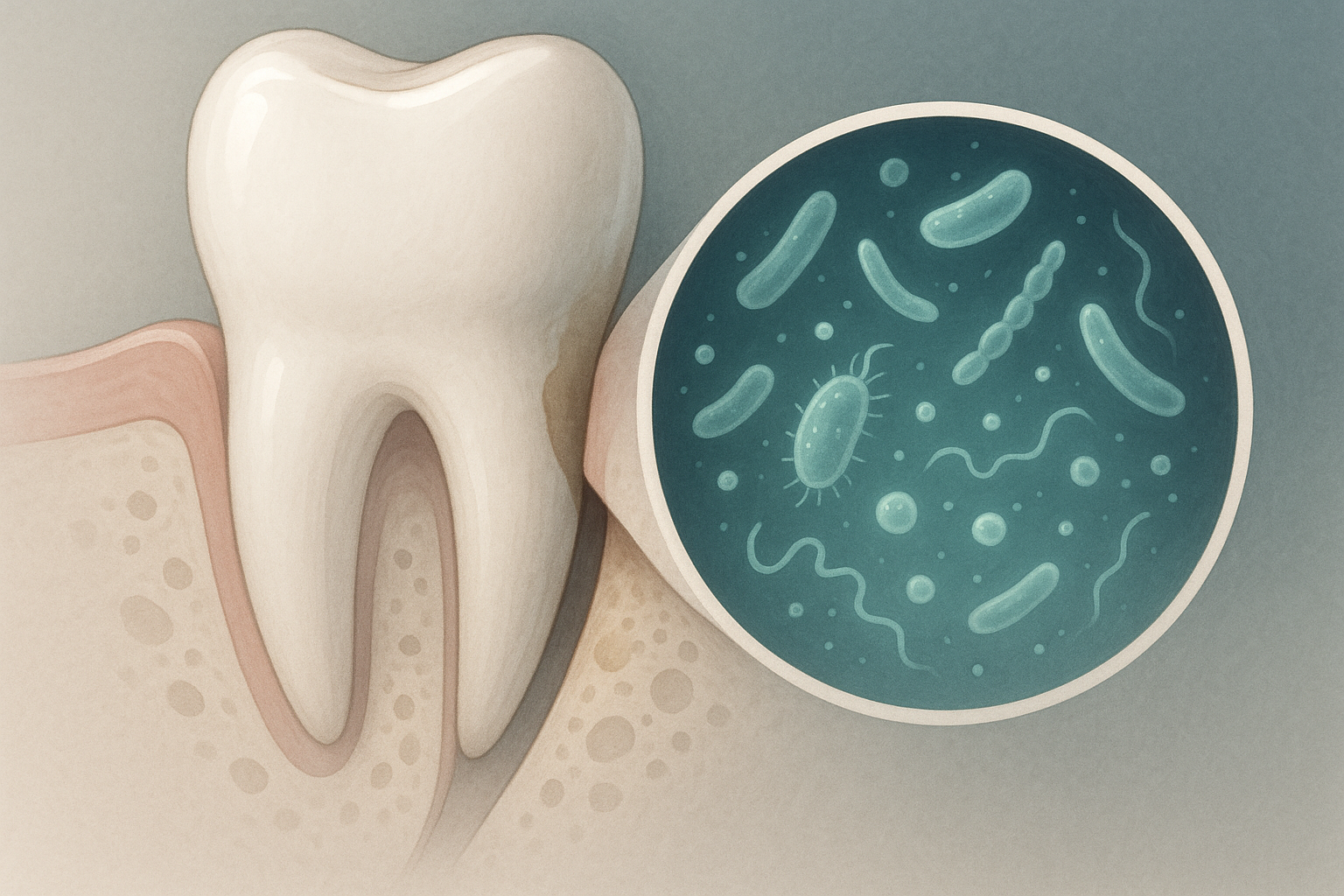
Periodontal pockets form when harmful bacteria accumulate below the gum line, causing gum inflammation and gradual bone loss around the teeth.
Knowing the extent of the damage is only half the story. To create a truly effective and lasting treatment plan, we need to know exactly what we’re fighting.
Building: Live Bacteria Analysis – The ‘What,’ ‘How,’ and ‘Why’
This is where the advanced diagnostics we use at Behrens Dental come into play, transforming our approach to gum health. Live bacteria analysis, also known as a microbiological test, is a simple, painless procedure that gives us an incredible amount of information.
What is it? It’s a method of taking a small sample of the bacteria from your deepest periodontal pockets . This isn’t just about checking if bacteria are present; it’s about identifying the specific types of pathogens, their quantity, and their activity level.
How does it work?
- Sample Collection: Using a tiny paper point, your dentist or hygienist takes a sample from the bottom of a periodontal pocket. This is quick and comfortable.
- Pathogen Identification: A specialist lab identifies the different bacteria with a DNA test.
- Pathogen Categories: The report from the microbiological lab categorises the bacteria into their distinct characteristics. We can identify aggressive, high-risk pathogens like Spirochetes or Porphyromonas gingivalis, which are strongly linked to severe periodontitis.
Why is this a game-changer?
This analysis tells us things that pocket measurements and X-rays can’t. It reveals the aggressiveness of your specific infection. Some people may have deep pockets caused by a less aggressive mix of bacteria, while others might have shallower pockets teeming with highly destructive pathogens.
Without this insight, treatment is based on a generalised approach. With it, treatment becomes precise and personal. It’s the difference between using a generic weedkiller on your entire garden versus identifying the specific invasive weed and using a targeted treatment that protects the plants you want to keep.
Mastery: Personalized Treatment Strategies – The Power of Precision
Once we have your unique bacterial profile, we can combine it with the “map” from your staging and grading assessment. This comprehensive diagnostic picture allows for a level of treatment personalisation that was previously impossible.
For example:
- Patient A’s Profile: Shows a high concentration of P. gingivalis. Research tells us this bacterium is a “keystone pathogen” that can orchestrate the entire destructive process. Their treatment plan might involve a specific targeted antibiotic alongside deep cleaning to disrupt its stronghold plus a certain number of Duo-Lase sessions.
- Patient B’s Profile: Reveals an overgrowth of motile bacteria like Spirochetes. This indicates a very active, aggressive infection. The treatment might prioritize advanced therapies, such as our non-surgical Duo Lase protocol, designed to eliminate these specific pathogens.
- Each patient is individually diagnosed. The outcome of the microbiological test, staging and grading determines the number of deep cleanings and number of Duo-Lase laser sessions necessary
This tailored approach offers significant benefits:
- Increased Effectiveness: By targeting the root cause, treatments are far more likely to be successful in the long term.
- Reduced Need for Broad-Spectrum Antibiotics: Instead of guessing, we can use targeted therapies, which helps prevent antibiotic resistance.
- Prevents Recurrence: By monitoring the bacterial environment, we can catch potential problems before they lead to a full-blown relapse.
- Empowers You: Understanding your bacterial profile helps you appreciate the importance of your home care routine and professional cleanings.
This is the future of periodontal care: a synergy of traditional assessment and modern microbiological insight. It ensures that your treatment plan is designed not for “gum disease,” but for your gum disease.

Understanding which bacteria are present in your gums helps tailor treatment exactly to your needs, improving outcomes and reducing unnecessary antibiotics.
Taking Control of Your Gum Health
The first step to winning any battle is to know your enemy. If you’ve been struggling with persistent gum issues, it might be time to ask for a more complete picture of your oral health. An incomplete diagnosis can lead to ineffective treatment and continuing damage to your gums and bone.
Understanding the specific bacterial cause of your gum disease is not just an interesting piece of data; it’s the key to unlocking a healthier, more stable future for your smile. It empowers you and your dental team to work together with precision and confidence, ensuring the best possible outcome.
Frequently Asked Questions
1. Is a bacteria analysis a standard procedure for gum disease?
Not yet, but it represents the cutting edge of periodontal care. Many practices rely solely on traditional staging and grading. Clinics that incorporate microbiological testing, like Behrens Dental Practice, are committed to providing a more precise, root-cause-based diagnosis and treatment plan.
2. What are the most common high-risk bacteria found?
The “red complex” is a group of three bacteria strongly associated with severe periodontitis: Aggregatibacter actinomycetemcomitans , Porphyromonas gingivalis, Tannerella forsythia, and Treponema denticola (a type of spirochete). Identifying these in a sample is a clear sign that a more intensive treatment approach is needed.
3. Does this test hurt?
Not at all. The sample is collected with a small paper point that is gently placed into the gum pocket for a few seconds. It’s a quick, painless, and non-invasive procedure.
4. How does this analysis help prevent gum disease from coming back?
Periodontal disease is a chronic condition that requires ongoing management. By identifying the aggressive pathogens, we can create a highly targeted maintenance plan. Follow-up tests can monitor the bacterial levels, allowing us to intervene early if we see the bad bacteria starting to return, often before new symptoms even appear. The the Behrens Dental Practice we also prescribe certain probiotics, which prevent these aggressive bacteria from growing back.
5. Besides treatment, what can I do if I have high-risk bacteria?
Your personalised treatment plan is the most critical step. This will likely be followed by a bespoke home-care routine that may include specific antimicrobial mouth rinses, water flossers, or other tools designed to disrupt the environment where these bacteria thrive.
Ready to Learn More?
Understanding your unique oral microbiome is the first step toward lasting gum health. If you’re ready to move beyond treating symptoms and want to address the true cause of your gum disease, exploring a comprehensive diagnosis is your next step.
- Learn more about the fundamentals of what is periodontal disease.
- Discover why it’s crucial to ask “is gum disease dangerous” for both your oral and overall health.
- Explore how this data informs advanced treatments like laser periodontal treatment London.