

Periodontal Pocket Depths and Gum Health Explained
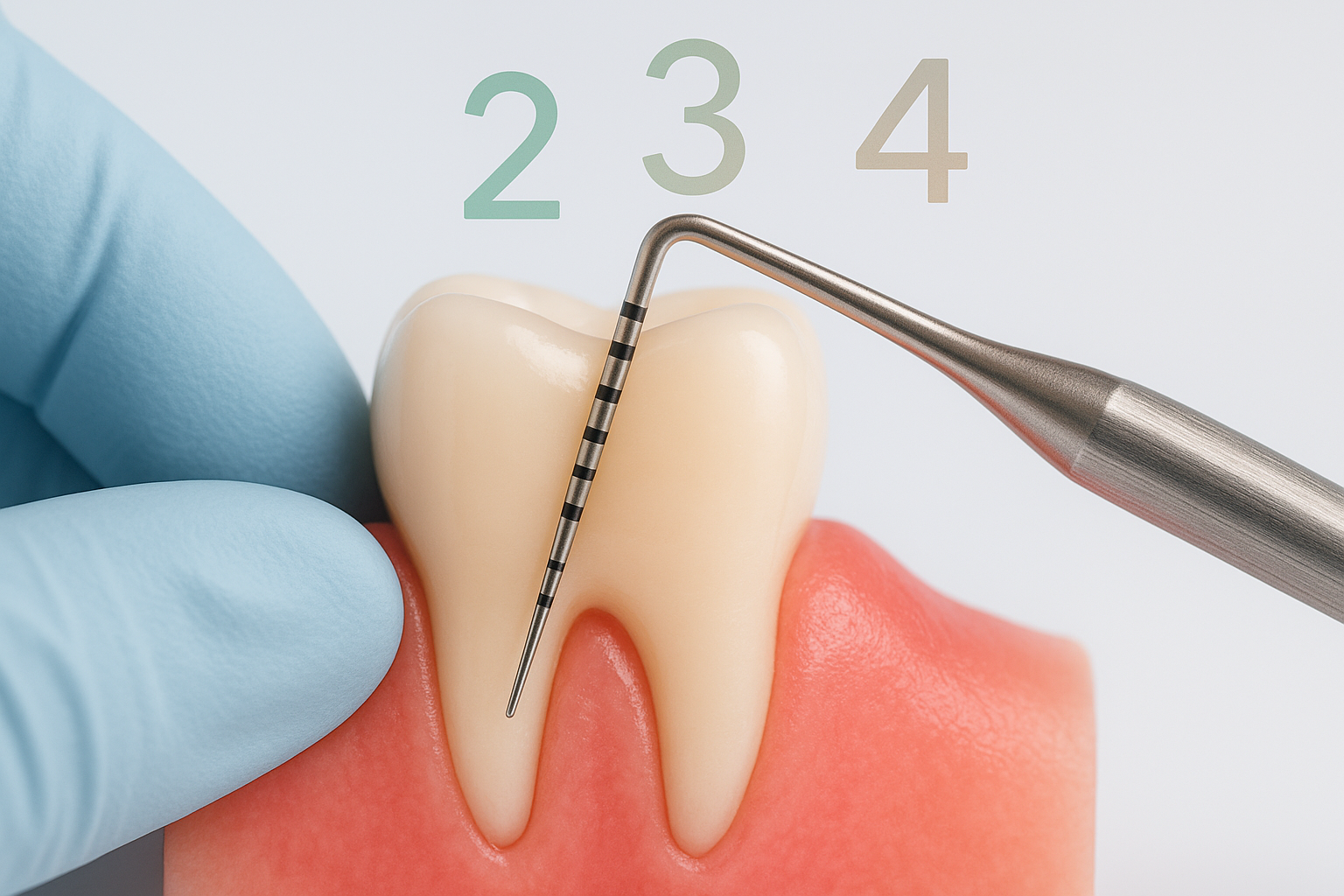
“Two… three… two… four… three…”
You’re lying back in the dental chair, and your hygienist or dentist has started a quiet monologue. They gently trace along your gum line with a small instrument, calling out a series of numbers to their assistant. You hear a “four” and your mind starts to race. Is that bad? Was it a “two” before? Is this a test you’re failing?
If you’ve ever felt a flicker of anxiety during this process, you’re not alone. This simple measurement, known as a periodontal probing, is one of the most important parts of your dental check-up. Those numbers are a direct report on the health of your gums and the foundation of your teeth. But without a translation, they’re just numbers.
Think of us as your friendly translator. At Behrens Dental Practice in London, our team takes the mystery out of these numbers every day—helping patients understand what they mean and how to protect their gum health for life. We’ll turn that clinical jargon into clear, actionable knowledge that empowers you to take control of your oral health for life.
Book a periodontal consultation at Behrens Dental Practice or call 0207 584 8810 to schedule your appointment today.
Foundation: What Are Periodontal Pockets & Why They Matter?
Before we can understand the numbers, we need to understand the landscape. Imagine your tooth and gum meet like a turtleneck sweater around your neck. There’s a small, natural space between the fabric (your gum) and your neck (the tooth). In a healthy mouth, this space is a shallow V-shaped groove called a sulcus.
A dental professional measures this space using a tiny ruler called a periodontal probe. It’s a gentle process designed to assess the depth of that sulcus at several points around each tooth.
So, what are we measuring?
- A Healthy Sulcus: This is a shallow, tight space, typically between 1 and 3 millimetres (mm) deep. It’s a sign that your gum tissue is firmly attached to the tooth, creating a strong seal against harmful bacteria.
- A Periodontal Pocket: When plaque and bacteria accumulate, they can cause inflammation. Your body’s response can lead to the gum tissue detaching from the tooth, and the underlying bone can begin to break down. This deepens the sulcus, turning it into a periodontal pocket.
This is the critical difference: a sulcus is a sign of health; a pocket is a sign of disease. The deeper the pocket, the larger the space for bacteria to thrive where your toothbrush and floss can’t reach, creating a vicious cycle of inflammation and destruction.
Building: Interpreting Your Pocket Depths: A Guide to the Numbers
Now for the main event: what do those numbers actually mean for you? Let’s break it down into a simple traffic light system. And critically, we’ll add another key piece of data your dentist is looking for: Bleeding on Probing (BOP). If your gums bleed during the measurement, it’s a “smoke alarm” for active inflammation.
1-3mm: The Green Zone (Healthy)
- What it means: Congratulations! These numbers indicate healthy, firm gum tissue. The attachment between your gum and tooth is strong.
- Bleeding? Ideally, there is no bleeding on probing in this range. A little bleeding with a 3mm reading might be a very early sign of gingivitis (gum inflammation), but it’s often reversible.
- Your Action Plan: Maintain your excellent home care routine (brushing twice a day, flossing daily) and continue with your regular professional cleanings. You’re doing a great job!
4mm: The Yellow Zone (The Warning Light)
A 4mm reading is where things get nuanced. It’s a sign that requires investigation, not panic.
- What it means: This indicates a potential trouble spot. The pocket is deeper than ideal, suggesting some detachment has occurred. This is often the earliest stage of periodontitis (gum disease).
- Bleeding is the Key:
- A 4mm pocket with bleeding: This is a clear warning sign of active disease. It’s your body telling you there’s an active inflammatory process that needs to be addressed professionally.
- A 4mm pocket without bleeding: This is less concerning. It could be a stable “pseudo-pocket” due to swollen gums, or a previously treated area that is now being maintained. Your dentist will monitor it closely.
- Your Action Plan: It’s time to step up your game. Your dentist or hygienist will likely recommend improved home care techniques and may suggest a more frequent cleaning schedule. This is the stage where you can make the biggest difference in halting disease progression.
5-6mm: The Orange Zone (Mild to Moderate Disease)
- What it means: These numbers are a definitive sign of periodontitis. At this depth, some of the bone that supports your tooth has been lost. The pockets are too deep to be cleaned effectively with a toothbrush or floss at home.
- Bleeding? Bleeding is very common in this range and confirms active disease.
- Your Action Plan: Professional intervention is necessary. This usually involves a “deep cleaning” (called scaling and root planing) to remove tartar and bacteria from below the gum line, allowing the gums to heal and hopefully reattach. A more rigorous home care routine and more frequent professional cleanings are essential to manage the condition.
7mm+: The Red Zone (Advanced Disease)
- What it means: Pockets of 7mm or more indicate advanced periodontitis with significant bone loss. The stability of the tooth is now at risk.
- Bleeding? Active inflammation is almost always present.
- Your Action Plan: At this stage, a referral to a periodontal expert is often recommended. While scaling and root planning are still foundational, more advanced treatments such as Duo-Lase, a laser assisted periodontal treatment has shown huge benefits in comparison to traditional periodontal treatment. With Duo-Lase traditional surgical periodontal procedures are not necessary. Treatments like gum graft surgery London can address gum recessions . The goal is to halt the disease process and save the tooth.
Want to know your own numbers?
At a gum consultation we measure every pocket and explain what your numbers mean, so you’re not left guessing. Gums that bleed when you brush are a good reason to book. No referral needed.
Mastery: Beyond the Numbers: Staging, Grading, and Long-Term Health
Your pocket depth measurements are not just isolated numbers; they are key data points that help your dental team build a complete picture of your health. They use this information, along with x-rays and other factors, to officially Stage and Grade your periodontal disease.
- Staging (I-IV): This tells you the severity of the disease and the damage that has already occurred. Higher stages mean more significant bone and attachment loss.
- Grading (A-C): This estimates the future risk of progression. It considers factors like smoking, diabetes, and the rate of bone loss to predict how quickly the disease might worsen without intervention.
Think of it this way: Staging is a snapshot of where you are now. Grading is the forecast for where you’re headed.

Why It Matters Beyond Your Mouth
It’s a mistake to think of gum disease as just a “mouth problem.” A deep periodontal pocket is essentially a chronic, open wound inside your body. This wound provides a gateway for harmful bacteria to enter your bloodstream.
This is why researchers have found significant links between periodontal disease and other systemic health issues. Answering the question “is gum disease dangerous” involves looking at its connection to:
- Heart Disease: Inflammation from gum disease can contribute to arterial plaque.
- Diabetes: Gum disease can make it harder to control blood sugar levels, and vice versa.
- Respiratory Issues: Bacteria from the mouth can be inhaled into the lungs.
- Pregnancy Complications: Periodontitis has been linked to premature birth and low birth weight.
Understanding your pocket depths is the first step in protecting not just your smile, but your overall health.
Your Roadmap to Healthier Gums
Knowledge is power, and now you have the power to be an active participant in your gum health.
- Embrace Professional Care: Your dentist and hygienist are your most important allies. Regular check-ups and cleanings are non-negotiable for preventing and managing gum disease. A consistent hygienist appointment in South Kensington can be the key to maintaining those healthy 1-3mm measurements.
- Elevate Your Home Care: Ask your hygienist for specific instructions on how to brush and floss around any deeper pockets you may have. They might recommend special tools like interdental brushes or a water flosser.
- Explore Modern Treatments: If you have been diagnosed with periodontal disease, don’t be discouraged. Dentistry has evolved far beyond traditional surgery. Advanced, minimally invasive options like laser periodontal treatment in London can effectively treat gum disease with less discomfort and faster healing. At our practice, we are proud to offer the innovative Duo Lase technique, a non-surgical approach founded by Dr. Ole Behrens himself.
- Ask Questions: At your next appointment, don’t be shy. Ask your dentist:
- “What were my pocket depth measurements today?”
- “Do I have any areas with bleeding?”
- “What do these numbers mean for my long-term health?”
- “What specific steps can I take at home to improve these numbers?”
The next time you hear those numbers being called out, you won’t feel anxiety. You’ll feel informed. You’ll understand your personal gum health report and be ready to work with your dental team to ensure a lifetime of healthy smiles.
Frequently Asked Questions (FAQ)
Q1: Can periodontal pockets be reversed?
The damage from periodontitis (bone loss) cannot be reversed fully, but with Duo-Lase the jaw bone can recover to a certain degree and the disease process can be stopped. With professional treatment and excellent home care, gum inflammation can be resolved, and the pockets can shrink and become healthier and easier to maintain. The goal is to achieve stability and prevent further damage.
Q2: Is bleeding when my gums are probed normal?
No. While common, bleeding is never normal. Healthy gums do not bleed. Bleeding on probing is a key indicator of active inflammation and a sign that your gums need attention from a dental professional.
Q3: What’s the difference between gingivitis and periodontitis?
Gingivitis is the earliest stage of gum disease and involves inflammation of the gums without bone loss. It is completely reversible with good oral hygiene and professional cleanings. Periodontitis is the advanced stage where the inflammation has led to the loss of tissue and bone that support the teeth. Looking at a gum disease diagram can help visualize this progression.
Q4: How often should my pockets be measured?
For individuals with healthy gums, periodontal probing is typically done at least once a year. If you have gingivitis or periodontitis, your dentist will likely recommend more frequent measurements (e.g., every 3-6 months) to closely monitor your condition and the effectiveness of your treatment.
Q5: My dentist said I have a 5mm pocket. Does that mean I will lose my tooth?
Not necessarily. A 5mm pocket is a sign of active gum disease that requires immediate attention, but it does not automatically mean tooth loss is imminent. With prompt and appropriate treatment like laser assisted periodontal treatment, combined with your commitment to improved home care, the prognosis for the tooth can be very good. The key is to take action now to prevent the pocket from getting deeper.
Told you might lose a tooth? Get a second opinion.
A deep pocket doesn’t automatically mean losing the tooth. At a gum consultation we re-measure your gums, test for the bacteria causing the problem and explain every option, including the conservative ones.
Read next: our guide to periodontal staging and grading.