
Gum Grafting in London for Receding Gums
Cover exposed roots, ease sensitivity and restore an even gum line, with most patients back to normal within a week or two.
Receding Gums Treatment in London Starts With Finding the Cause
Gum grafting in London is available at Behrens Dental Practice in South Kensington, where Dr. Ole Behrens, Dr. Lior Burg and Dr. Georgios Kolaitis treat receding gums and the gum disease that often causes them. If you also have deep gum pockets, your plan treats the gum disease behind them as well as covering the exposed roots.
Beautiful teeth need a beautiful frame. If you've noticed sensitivity, or feel self-conscious about “long” teeth caused by gum recession, you're not alone, and it's worth having your gums checked.
Gum recession is more than a cosmetic concern. It can be a sign of gum disease or another underlying problem, and left untreated, receding gums may lead to:
Where gum disease is part of the picture, your plan may include Duo-Lase™, our laser treatment for gum disease, which starts after your teeth have been cleaned by our hygienists.
Gum Graft Surgery in London, for One Tooth or Many
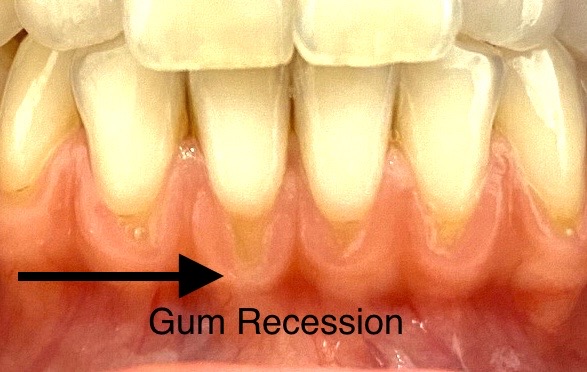
We treat everything from a single receding tooth to widespread recession, with a plan tailored to you after a thorough assessment. Gum grafting is a form of gum reconstruction surgery: it rebuilds gum that has pulled back from the tooth, covers the exposed root and restores a natural gum line.
Our techniques include the minimally invasive tunnelling technique, which is even gentler than pinhole surgery, and coronally advanced flap procedures. Our guide explains how each technique for gum recession works.
Grafts use either your own tissue, taken from the roof of your mouth, or a man-made collagen alternative from Geistlich. The collagen option avoids a second wound on your palate, which means less pain and faster healing. It suits treating several teeth at once, such as all the lower front teeth, and it addresses any underlying periodontal disease at the same time. Every procedure is carried out with precision, often under a microscope.
Choosing Who Treats Your Gums
A graft is a small operation on a sensitive part of your mouth, so it's worth knowing who is looking after you. Here is what you can expect from us.
Experience in Periodontal Health
Your graft is planned by a team led by Dr. Ole Behrens, principal dentist with a special interest in gum treatment and implant surgery. He works with Dr. Lior Burg and Dr. Georgios Kolaitis, who holds an MSc in Periodontology, so your plan rests on a deep understanding of the gums and the surgery behind it.
Microsurgical Precision
High-powered microscopes allow smaller incisions and finer stitches, which often means faster healing and a more comfortable recovery.
Advanced, Minimally Invasive Techniques
The tunnelling technique avoids large incisions, keeping more of your healthy tissue and making the days after surgery easier.
A Focus on Your Comfort
We take the time to listen, explain every step and make sure you feel calm and informed, from your first consultation to your final follow-up.
What Happens, Step by Step
We explain each stage before it happens, so you always know what comes next.
Consultation and Diagnosis
A thorough examination assesses how far your gums have receded, checks for gum disease and identifies the underlying cause. We discuss your goals and design a personalised treatment plan with you.
The Procedure
The area is completely numbed with local anaesthetic, then the graft is placed using meticulous, minimally invasive techniques.
Recovery and Aftercare
We give you detailed aftercare instructions, and with modern techniques many patients recover in as little as one to two weeks. Follow-up appointments check how the graft is healing, and a regular maintenance plan helps protect the result for the long term.
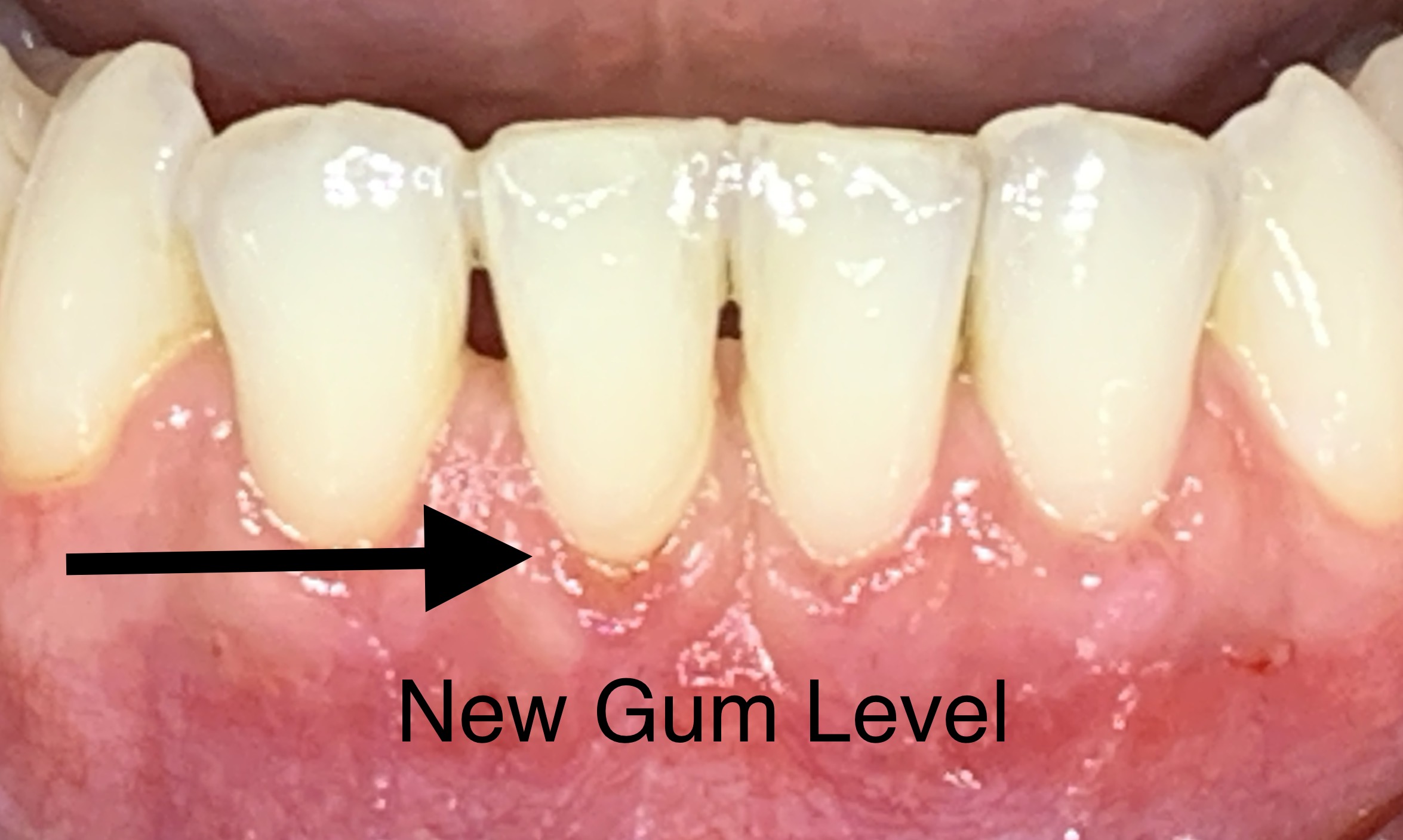
Before and After: What Treatment Can Change
Every patient's gums are different, and results vary from person to person. At your consultation, we'll explain what a graft could realistically achieve for you.
The Lasting Benefits of Gum Grafts
Gum grafts protect the parts of your teeth that receding gums leave exposed. A successful graft can:
What Patients Ask Before Treatment
Is gum grafting painful?
Gum grafting is carried out under local anaesthetic, so the area is numb and you shouldn't feel pain during the procedure. Afterwards, most patients find any discomfort mild and easy to manage with over-the-counter pain relief. Our minimally invasive techniques also help to keep swelling and soreness down while your gum heals.
How long does it take to recover from a gum graft?
Most patients feel back to normal within a week or two of a gum graft. For a short time you'll be asked to eat soft foods and follow specific hygiene instructions to protect the graft while it heals. We see you again at follow-up appointments to check that everything is settling well.
How successful is gum grafting?
Gum grafting is one of the most predictable procedures in dentistry when an experienced dentist carries it out, and connective-tissue grafts, using tissue from the palate, are widely seen as the gold standard. How well a graft works for you depends on the cause of your recession and your gum health, which we explain at your consultation.
Are there any alternatives to gum grafting?
For minor recession, better brushing or a deep clean may be enough. Where recession has left a root exposed, gum recession surgery with a graft is the only reliable way to restore the lost gum. If gum disease is the cause, our non-surgical laser treatment, Duo-Lase, treats that, but it can't replace gum that has already gone.
How much does gum grafting cost in London?
The cost of gum grafting in London depends on the technique, the graft material, how many teeth need treating and whether gum disease is treated too. We explain the full cost before treatment starts. On the NHS, one type, the free gingival graft, may be available in some areas. Our London guide to gum treatment costs explains more.
Take the next step towards healthier gums
Ignoring receding gums isn't a solution. Protecting your teeth and restoring your smile starts with a conversation.
Ready to Book Your Appointment?
New patients are welcome, and you don't need a referral. Book online or call us to arrange a consultation about your gums. If you'd rather talk through your options first, book a free session with our treatment coordinator.
Book Online NowOr call us: 0207 584 8810
0% APR Finance Available. Finance subject to age, status and affordability. See our finance options.