

How Gum Disease Raises C
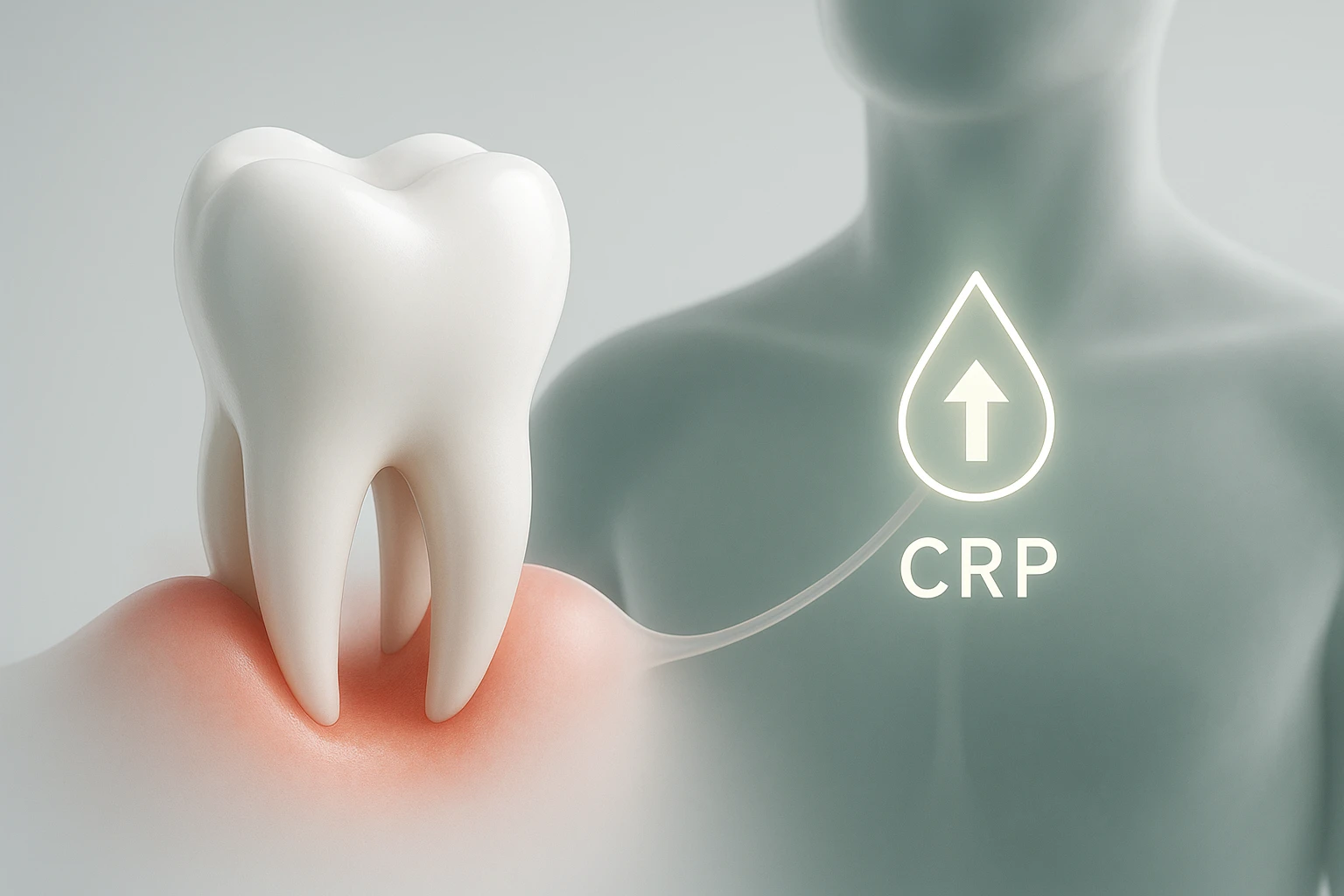
You’ve just come from a routine check-up, and your doctor mentions your C-reactive protein, or CRP, levels are a bit high. They might talk about general inflammation, but the conversation often stops there, leaving you with more questions than answers. What if one of the most significant clues to understanding that number wasn’t in your heart or your joints, but hiding in plain sight—in your gums?
It’s a connection that surprises most people, yet it’s one of the most important stories modern medicine is telling about our interconnected health. The low-grade, chronic infection in your mouth from gum disease can trigger a body-wide inflammatory response, and your CRP level is the messenger delivering the news. Understanding the inflammatory effects of advanced gum infections is the first step toward not just a healthier smile, but a healthier you. It reframes oral care from a simple matter of hygiene to a crucial component of managing your overall wellbeing.
What Are Systemic Inflammatory Markers, Anyway?
Before we connect the dots, let’s have a quick, friendly chat about inflammation. Think of inflammation as your body’s emergency response system. When you get a cut, your immune system sends inflammatory cells to the site to fight off germs and begin healing. The area gets red, swollen, and warm—a sign that your body is doing its job. This is acute inflammation, and it’s a good thing.
The problem arises when this response doesn’t switch off. Chronic inflammation is like an alarm that’s stuck ringing quietly in the background, day in and day out. It’s subtle, but over time, it wears down your body’s systems.
So, how do we know if this is happening? We look for clues in the blood, known as “biomarkers.”
C-reactive protein (CRP) is one of the most reliable biomarkers for systemic inflammation. It’s a protein produced by your liver in response to inflammatory signals. When your doctor orders a CRP test, they’re essentially checking how loud that inflammatory alarm is ringing throughout your body. While high levels can be due to many things, researchers are increasingly pointing to a common and often overlooked culprit: chronic periodontal disease.
The Surprising Connection: How Gum Disease Fuels Systemic Inflammation
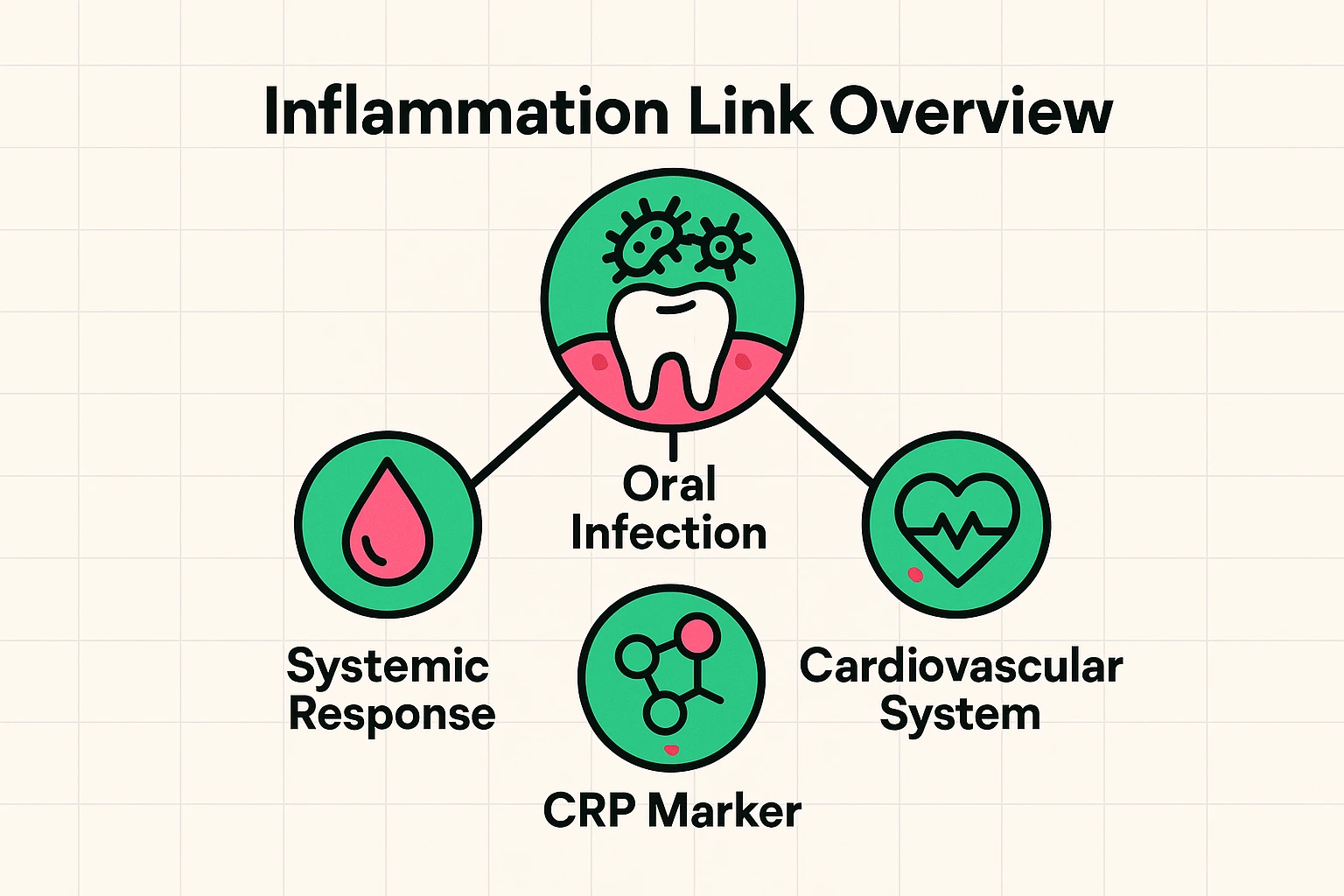
It can be hard to imagine how a problem in your mouth could affect your entire body, but the pathway is surprisingly direct. Periodontal disease isn’t just about bleeding gums; at its core, it is a chronic bacterial infection of the tissues supporting your teeth. If you’re wondering what periodontal disease is, it begins with plaque buildup that hardens into tartar, creating a breeding ground for harmful bacteria.
Here’s how the local infection goes global:
- Breaching the Barrier: In a healthy mouth, your gums form a tight seal around your teeth. But in periodontal disease, the gums become inflamed and pull away, forming “pockets.” These pockets are deep, warm, and filled with bacteria.
- Entering the Bloodstream: The tissue lining these pockets is thin and full of tiny blood vessels. Harmful bacteria and their toxic byproducts can easily pass through this weakened barrier and enter your bloodstream.
- Triggering a Body-Wide Alert: Once these bacteria are circulating in your body, your immune system identifies them as invaders. It launches a widespread, low-grade defensive attack. This prompts the liver to produce more C-reactive protein, raising your CRP levels and putting your entire body in a state of chronic inflammation.
This isn’t a minor event. It’s a constant, simmering state of alert that can contribute to some of the most serious health conditions we face today.

The Proof Is in the Numbers: CRP Levels and Periodontal Disease Severity
This connection isn’t just a theory; it’s backed by a growing body of scientific evidence. Numerous studies published in journals like the Journal of Clinical Periodontology have demonstrated a clear, direct correlation: the more severe the periodontal disease, the higher the systemic CRP levels.
One landmark study published by the National Center for Biotechnology Information (NCBI) found that individuals with periodontitis had significantly higher levels of CRP compared to those with healthy gums. This elevation wasn’t just a small blip; it was often high enough to be associated with an increased risk for other inflammatory conditions.
This is the “aha moment” where oral health clicks into place as a pillar of overall health. The inflammation originating in your mouth doesn’t stay there. The elevated CRP it causes is a well-established risk factor for:
- Cardiovascular Disease: Chronic inflammation can damage the lining of arteries, leading to atherosclerosis (hardening of the arteries), heart attack, and stroke.
- Type 2 Diabetes: Inflammation can interfere with the body’s ability to use insulin, making blood sugar control more difficult.
- Rheumatoid Arthritis: The inflammatory pathways are similar, and gum disease can exacerbate symptoms.
- Certain Cancers: Chronic inflammation is linked to an increased risk of developing some types of cancer.
Understanding the risks of periodontal disease is to understand that we are not just talking about teeth, but about systemic health.
Turning the Tide: How Treating Gum Disease Can Lower Your Systemic Inflammation
Here is the most empowering part of this story: this is a modifiable risk factor. You have the power to reduce this source of inflammation. Studies have shown that effective periodontal treatment can lead to a significant reduction in CRP levels, thereby lowering your systemic inflammatory load.
At Behrens Dental Practice, our dentists with a special interest in periodontics focus on addressing the root cause of the infection to restore both oral and systemic health. Treatment isn’t one-size-fits-all and is tailored to your specific condition, but it is always focused on eliminating the bacterial infection and halting the disease’s progression.
Effective modern treatments include:
- Scaling and Root Planing: This non-surgical deep cleaning is the foundational step. We meticulously remove plaque and tartar from above and below the gumline and smooth the tooth roots to help the gums reattach.
- Laser-Assisted Periodontal Therapy (Duo-Lase™): For more advanced cases, we utilize innovative technologies like Duo-Lase™. This non-surgical laser gum treatment precisely targets and eliminates harmful bacteria deep within the gum pockets with minimal discomfort. It also promotes healing and regeneration of healthy tissue, offering a less invasive and highly effective alternative to traditional surgery.
By controlling the infection in your gums, we can help break the cycle of chronic inflammation. Patients often see not only an improvement in their oral health—no more bleeding, swelling, or discomfort—but also a measurable decrease in their CRP levels at their next medical check-up.
Frequently Asked Questions
Can gum disease really cause health problems in other parts of my body?
Absolutely. The mouth is a gateway to the rest of the body. The chronic inflammation and bacteria from periodontal disease can travel through the bloodstream, contributing to serious systemic conditions like heart disease, diabetes, and more.
If my CRP is high, does it definitely mean I have gum disease?
Not necessarily. High CRP is a general marker of inflammation and can be caused by many conditions, including infections, arthritis, or other chronic diseases. However, because gum disease is so common and often silent, it’s a critical and frequently overlooked source that should always be investigated by a dental professional, especially if other causes aren’t obvious.
Will just brushing and flossing be enough to lower my CRP levels?
Excellent home care is vital for preventing gum disease, but it often isn’t enough to treat an active, established infection. Once deep pockets have formed, brushing and flossing can’t reach the bacteria causing the problem. Professional treatment is necessary to eliminate the infection at its source.
Is gum disease genetic?
There can be a genetic component. Research suggests that is gum disease hereditary for some individuals, making them more susceptible to developing the condition. If you have a family history of gum disease or tooth loss, it’s even more important to be proactive with check-ups and professional cleanings.
Your Next Step Towards Better Overall Health
Your body works as a single, integrated system. A fire in one room—your mouth—will inevitably spread smoke throughout the entire house. Elevated C-reactive protein is that smoke alarm, and it’s urging you to find the source.
Ignoring bleeding or tender gums is like ignoring that alarm. The good news is that you can take control. A thorough periodontal examination is the first step in understanding your oral health status and its impact on your body. If you are looking for a periodontist in London who understands this deep connection, our team is here to help.
By using advanced diagnostics and patient-focused treatments, we can help you not only protect your smile but also lower your body’s inflammatory burden. You can see the incredible results of treatment for yourself. Taking care of your gums is one of the most proactive steps you can take for your long-term health and vitality.