

Longevity and Care for Porcelain Veneers Explained
When you decide to transform your smile with porcelain veneers, you aren’t just purchasing a cosmetic enhancement; you are making a significant investment in your confidence and professional image. Much like purchasing a classic car or a piece of fine art, the initial acquisition is only the beginning of the journey. The true value comes from how well that investment is preserved over time.
While modern dental ceramics are engineering marvels—stronger and more aesthetic than ever before—they are not indestructible. For patients seeking exceptional dental care in South Kensington, understanding the long-term relationship between your lifestyle, your biology, and your new smile is just as important as the procedure itself. By shifting your mindset from “fixing” your teeth to “maintaining” a sophisticated medical device, you can extend the lifespan of your veneers from the industry average of 10 years to 20 years or more.
The Anatomy of Longevity: It’s Not Just the Porcelain
To understand how to protect your veneers, you first need to understand why they might fail. It is rarely the porcelain itself that gives up. High-quality dental ceramic is incredibly resistant to compression and staining. The vulnerability lies in the “foundation”—specifically, the bond between the veneer and your natural tooth, and the health of the surrounding gum tissue.
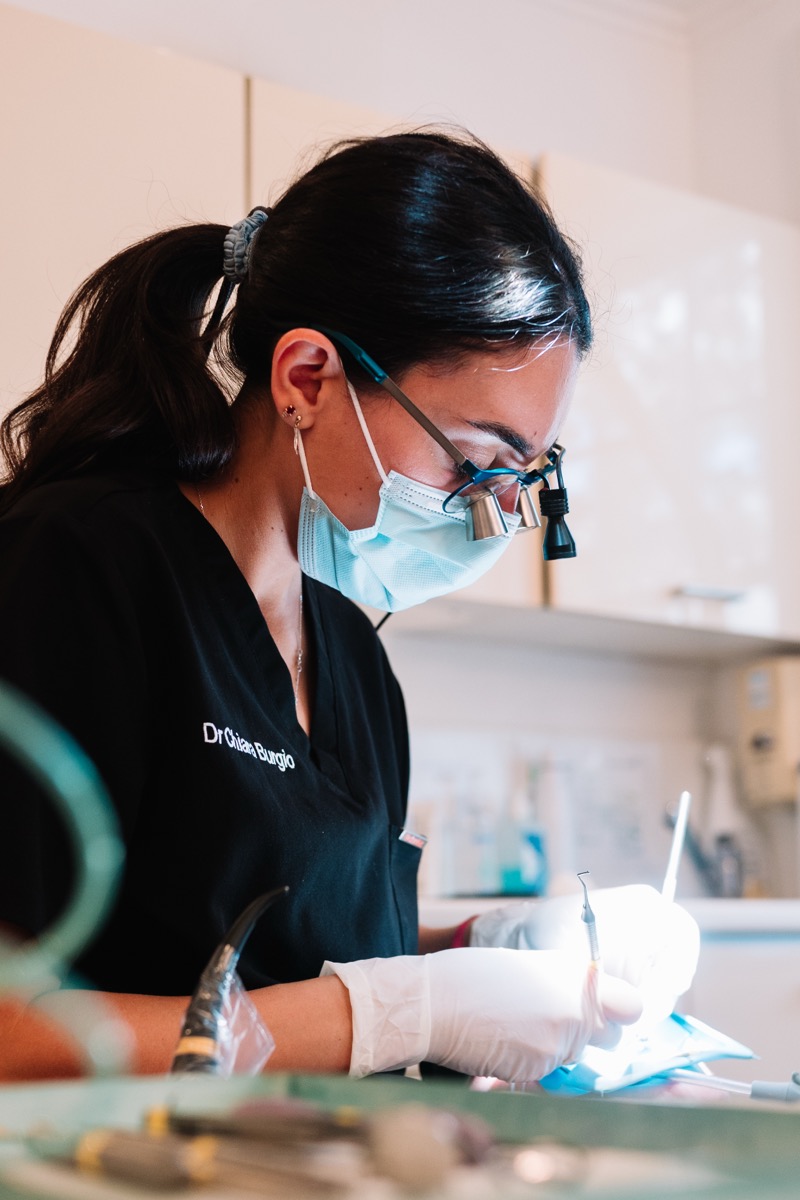
Think of your veneers like tiles on a floor. If the subfloor (your tooth) is compromised, or if the grout (the bonding cement) begins to leak, the tile will eventually crack or debond. This is why the most critical factor in longevity isn’t just how you brush, but the precision of the initial placement. The use of high-powered microscopes during the fitting process ensures that the margin—the microscopic line where the veneer meets the tooth—is perfectly sealed. A gap here is an open door for bacteria, leading to decay underneath the veneer.
The Owner’s Manual: Daily Care Protocols
Maintaining a smile makeover doesn’t require a complex new lifestyle, but it does require a refined approach to oral hygiene. The goal is to protect the glaze of the porcelain and the integrity of the gum line.
1. Rethink Your Toothpaste
Many “whitening” toothpastes on the market rely on abrasive particles (like silica) to scrub away surface stains. While effective on natural enamel, these abrasives can be like taking sandpaper to your veneers. Over time, they can scratch the ceramic glaze, making the surface dull and actually more prone to attracting stains. Switch to a non-abrasive gel or a toothpaste specifically formulated for cosmetic dental work.
2. Precision Flossing
The gum line is the frame of your smile. If you develop gum disease (gingivitis), the gums may recede, exposing the root of the tooth and the edge of the veneer. This not only ruins the aesthetic integration—creating a visible line—but also exposes the tooth to decay. Flossing isn’t just about removing food; it’s about disrupting bacteria at that critical margin where the porcelain ends and the tooth begins.
Lifestyle Stress Tests: Real-World Scenarios
Your life in South Kensington likely involves social dinners, perhaps an espresso in the morning, or stress that manifests in sleep. Here is how those factors interact with your dental investment.
The Coffee and Wine Connoisseur
“Do veneers stain?” is a common question. Generally, high-grade porcelain is impervious to staining. However, the bonding cement at the edges is not. If you frequently consume highly pigmented fluids like red wine, black coffee, or turmeric-rich foods, you may eventually see a thin, dark line forming at the edge of the veneer.
- The Fix: You don’t need to give up your lifestyle. Simply rinsing your mouth with water after acidic or pigmented drinks neutralizes the pH and washes away the pigments before they can settle into the microscopic margins.
The Stress Grinder (Bruxism)
This is perhaps the single biggest threat to porcelain veneers. Many high-performing professionals grind or clench their teeth at night due to stress. While veneers are strong, they lack the shock absorption of natural teeth. Excessive grinding forces can cause the ceramic to chip or fracture.
- The Fix: If your aesthetic dentist suspects bruxism, a custom-made occlusal splint (night guard) is non-negotiable. It acts as a shock absorber, protecting your investment while you sleep.
The Role of Professional Maintenance
Even with perfect home care, professional maintenance is the safety net for your smile. This goes beyond a standard “scale and polish.” For veneer patients, hygienic visits are diagnostic opportunities.
Advanced practitioners use these appointments to check for “marginal integrity.” They are looking for the earliest signs of leakage or debonding that aren’t visible to the naked eye. By catching a microscopic gap early, it can often be sealed or repaired, saving you from needing a full replacement of the veneer later.
When searching for veneers near me, look for a practice like Behrens Dental Practice that emphasizes this continuity of care. The best aesthetic outcomes rely on a team approach where the dentist who designed the smile works closely with the hygienist who helps you maintain it.
How long do porcelain veneers actually last?
While the textbook answer is often 10-15 years, this is an average that includes patients with poor maintenance habits. With distinct attention to gum health, a protective night guard (if needed), and regular check-ups, it is not uncommon for modern veneers to last 20 years or longer.
Can I eat apples and crusty bread?
Yes, but with a modification in technique. Veneers have incredible shear strength but lower tensile strength. While you shouldn’t be afraid to eat, it is wise to avoid using your front teeth to “tear” very hard foods. Cut the apple or crusty bread and chew with your back teeth (molars) to distribute the force evenly.
Will my veneers change colour over time?
The porcelain itself will not change colour. However, your natural teeth underneath or adjacent to the veneers can change shade due to aging or diet. This is why maintaining a relationship with a dentist who understands colour science is vital; they can help you manage the shade of your natural teeth to ensure they continue to blend seamlessly with your veneers.
The Next Step in Your Smile Journey
Preserving a smile makeover is a partnership between patient and clinician. It requires a blend of excellent home care, smart lifestyle choices, and the watchful eye of an expert dental team.
If you are considering veneers, or already have them and want to ensure they remain pristine for decades, the conversation starts with a comprehensive assessment. By understanding the unique biology of your mouth and the mechanics of your bite, we can create a maintenance plan that protects your investment and keeps you smiling with confidence.