
Multilingual Dental Care and Communication Tips
Moving to a new city is an exhilarating leap into the unknown, but for the global community residing in London, the logistics of daily life can sometimes overshadow the excitement. While finding the best local coffee shop is a fun discovery process, finding healthcare often brings a unique layer of anxiety. This is particularly true in dentistry, where the fear of the unknown is compounded by the fear of being misunderstood.
For international residents and frequent travelers, the challenge isn’t just finding a clinic; it’s finding a partner who understands the nuance of their specific situation. For those seeking a specialist dentist/dental care in Knightsbridge, London, understanding the intersection of advanced technology and multilingual support is vital for long-term health. It is about bridging the gap between high-end private practice and the comfort of clear communication.
The Silent Barrier in Global Healthcare
There is a distinct difference between conversational fluency and “medical fluency.” You might be perfectly comfortable ordering dinner or conducting a business meeting in English, but explaining the precise sensation of a toothache or understanding the complexities of a gum graft is a different tier of language entirely.
In the medical world, this is known as the “Translation Gap.” When a patient cannot fully articulate their symptoms—or worse, feels embarrassed to ask for clarification on a diagnosis—clinical outcomes can suffer. A patient might describe their gums as “sore,” a generic term that could imply anything from aggressive brushing to the early stages of gingival disease in London.
Without a dentist who can probe deeper, perhaps in the patient’s native tongue, serious conditions can be masked by simple language. This is why multilingual capabilities in a dental practice are not just a luxury amenity; they are a diagnostic tool. When our multilingual team speaks your language, they aren’t just being polite—they are removing the barrier to accurate diagnosis. Our team works in English, French, German, Greek, Hebrew, Hindi, Italian, Nepali, Polish, Portuguese, Punjabi and Spanish.
The “Global Patient” Lifestyle and Periodontal Health
International residents in areas like Knightsbridge often share a common lifestyle trait: mobility. Whether it is for business travel or visiting family back home, the “global patient” is rarely in one place for long stretches of recovery time.
This lifestyle creates a specific conflict with traditional dental treatments, particularly regarding gum health. Traditional gum surgery often requires weeks of downtime, stitches, and follow-up appointments that don’t fit into a frequent flyer’s schedule. This is where the conversation must shift from “who is the nearest dentist” to “what is the most efficient technology?”
The Laser Revolution: Biostimulation and Speed
For the busy international resident, the “gold standard” of care is defined by speed of recovery. This is why many are turning away from scalpel-based surgeries in favor of laser periodontal treatment London.
Advanced technologies, such as the Duo-Lase™ protocol, utilize laser energy not just to remove bacteria, but to stimulate the body’s natural healing response—a process known as biostimulation. For a patient who needs to fly to New York or Dubai in three days, the difference is profound. Laser therapy typically involves:
- Less bleeding and swelling compared to traditional surgery.
- Reduced need for sutures.
- Significantly faster tissue regeneration.
By understanding the physics of Duo-Lase technology, patients can make decisions that align with their travel schedules, ensuring oral health doesn’t ground them.
Linguistic Empathy: Reducing “Dental Chair Anxiety”
Anxiety is one of the primary reasons people delay dental care. Add a language barrier to that mix, and the anxiety multiplies. “Linguistic Empathy” is the concept of meeting the patient in their comfort zone.
Research consistently suggests that patients who are treated in their native language show higher compliance with treatment plans and report lower pain levels. It is psychological as much as it is practical; hearing a reassurance in your mother tongue triggers a sense of safety that a second language often cannot.
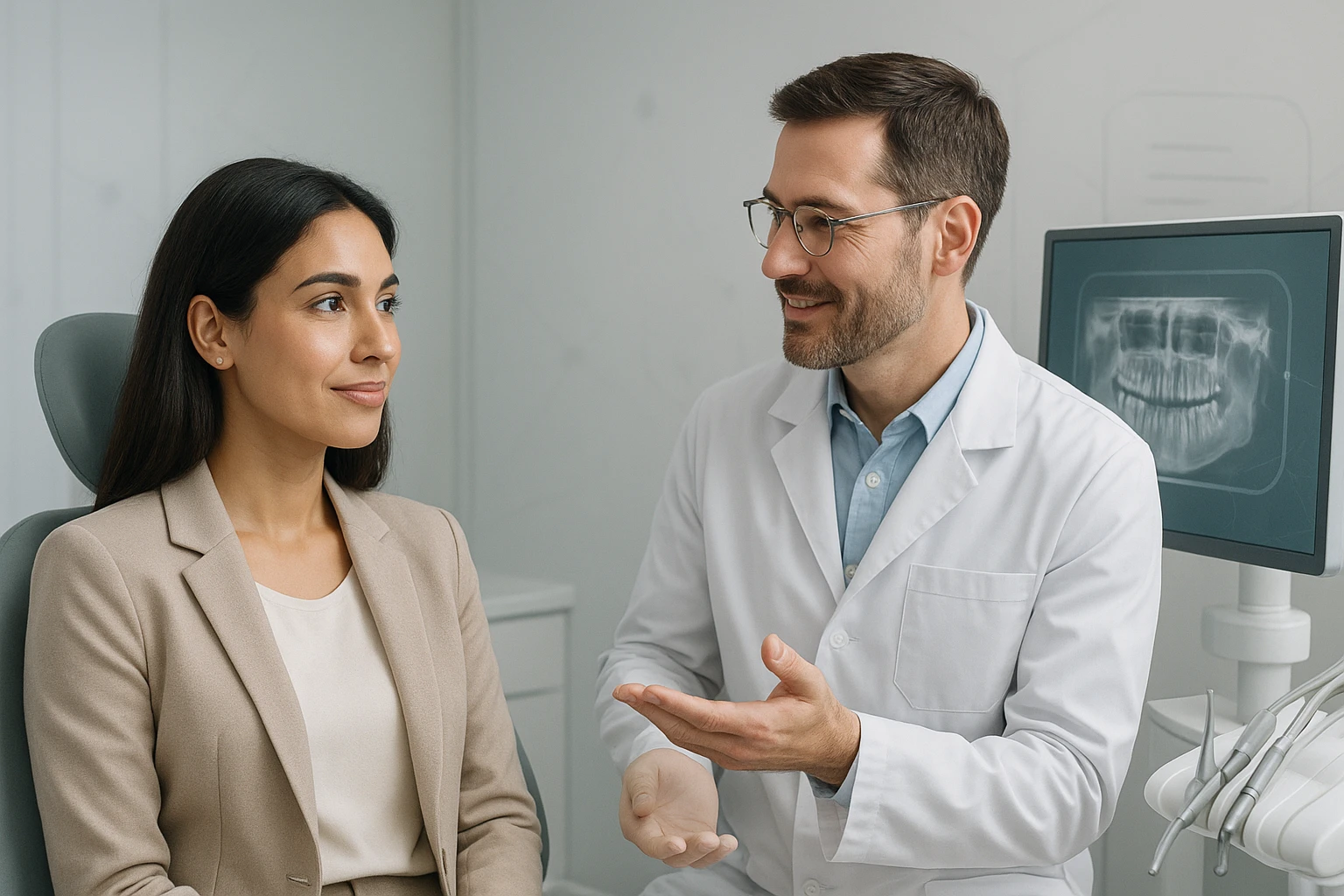
The Behrens Dental team’s ability to switch fluently between English and German, or explain a complex root canal procedure in your own language, transforms the appointment from a medical transaction into a relationship-building experience. It allows the dental team to move from being mere service providers to trusted health partners.
What to Look for in an International Dental Home
If you are new to London or looking for a practice that better suits your international lifestyle, look for these three pillars of care:
- Technological Transparency: Does the practice use high-powered microscopes and cameras to show you what is happening? Visual aids are a universal language that bridges any translation gap.
- Comprehensive Ecosystem: Can the practice handle everything from general hygiene to complex implants and orthodontics under one roof? Referring you to three different specialists across London is a logistical nightmare for an expat.
- Cultural Competency: Does the team understand the dental standards of your home country? A patient from the US might have different aesthetic expectations than a patient from the UK or Japan. A truly global practice understands these nuances.
Frequently Asked Questions
Can I fly immediately after dental surgery?
With traditional surgery, changes in cabin pressure can sometimes cause discomfort, and dentists may advise waiting. However, because laser treatments like Duo-Lase™ are less invasive and rely on the body’s natural healing (biostimulation), the downtime is often reduced. Always consult your dentist regarding your specific flight plans, but laser therapy generally offers more flexibility for travelers.
Do I need to bring my dental records from my home country?
While it is helpful to have past records, a modern practice equipped with digital diagnostics (CT scans and microscopes) can build a comprehensive picture of your oral health during your first visit. A multilingual team can also assist in communicating with your previous dentists if records need to be transferred and translated.
What if I have a dental emergency but don’t speak fluent English?
Look for multilingual dental services where the staff lists their spoken languages. In urgent situations, being able to describe the type of pain (throbbing, sharp, sensitivity to cold) in your native language is crucial for the dentist to diagnose the problem quickly and accurately.
Taking the Next Step in Your Health Journey
Your dental health shouldn’t suffer just because you are far from home. Whether you are dealing with the early signs of gum disease or simply looking for a smile makeover that meets your exacting standards, the key is to find a practice that listens—really listens—to what you need.
By prioritizing clear communication and advanced, travel-friendly technology, you can maintain a healthy smile that speaks the universal language of confidence, no matter where in the world you go next.
Behrens Dental Practice brings together the multilingual support, laser technology, and comprehensive clinical ecosystem that international patients across Knightsbridge and London rely on, so your oral health travels as well as you do.