
Managing jaw pain and teeth grinding in South Kensington
You know the feeling: the alarm goes off, and before you’ve even checked your first email of the day, you notice a dull, heavy ache radiating from your jaw to your temples. Perhaps you catch yourself clenching your teeth while navigating the morning commute, or maybe your partner has mentioned the sound of grinding coming from your side of the bed. If this sounds familiar, you aren’t alone. In the high-performance environment of SW7, where long hours and intense focus are the norm, your jaw is often the silent bearer of your stress.
That persistent tension, morning headache, and neck stiffness isn’t just “in your head”—it is a physiological response to the pressures of modern professional life. Understanding the link between stress, teeth grinding (bruxism), and jaw joint pain is the first step toward finding relief. Our approach to dentist in South Kensington focuses on providing that clarity, moving beyond simple symptom management to address the root causes of your discomfort.
The Hidden Cost of the Daily Grind: Understanding Bruxism and TMD
To understand why you are in pain, we need to distinguish between the action and the result. Bruxism is the act of grinding or clenching your teeth. It can happen while you’re awake (often during periods of deep concentration at work) or while you sleep (where it is much harder to control).
TMD (Temporomandibular Disorders) describes the problems that arise with your jaw joint (the TMJ) and the surrounding muscles as a result of that grinding.
Think of it like a runner’s knee injury. If you run ten miles a day with poor form, the cartilage in your knee eventually wears down, and the surrounding muscles become inflamed. Similarly, when you grind your teeth—exerting up to 250 pounds of force—you are overworking the delicate “hinge” of your jaw. Over time, this repetitive strain leads to inflammation, clicking, locking, and pain.
Why South Kensington Professionals Are Vulnerable
In our practice, we see a distinct pattern among patients living and working in South Kensington. The demographic here is driven and successful, but that drive often translates into specific physiological triggers for jaw pain. It isn’t just about “being stressed”; it is about how that stress manifests in your body.
- The “Concentration Clench”: Many professionals unconsciously clamp their teeth together when focusing on complex tasks, trading equities, or drafting legal documents. This is “Awake Bruxism,” and it fatigues the jaw muscles hours before bedtime.
- Postural Strain: Long hours at a desk often lead to a forward head posture (“tech neck”). This misalignment pulls on the muscles of the jaw and neck, making it physically difficult for the jaw to relax even when you want it to.
- Caffeine and Adrenaline: The fuel that keeps London moving—coffee—is a stimulant that increases muscle tension and the likelihood of sleep bruxism.
Myth vs. Fact: Clearing the Confusion
There is a lot of outdated advice circulating regarding jaw pain. Let’s set the record straight so you can make informed decisions about your health.
| Myth | Fact |
|---|---|
| “It’s just stress; it will go away when work slows down.” | While stress is a trigger, the habit of grinding often becomes “hardwired” into your nervous system. Even on holiday, you may continue to grind if the muscles aren’t retrained. |
| “A clicking jaw means I need surgery.” | Surgery is rarely the first option. The vast majority of TMJ issues are solved with conservative, non-invasive dental treatments like splint therapy and physiotherapy. |
| “A store-bought night guard is good enough.” | Generic “boil-and-bite” guards are often soft and chewy. This can actually stimulate your brain to chew on them while you sleep, potentially worsening muscle fatigue. |
Your Journey from Diagnosis to Relief
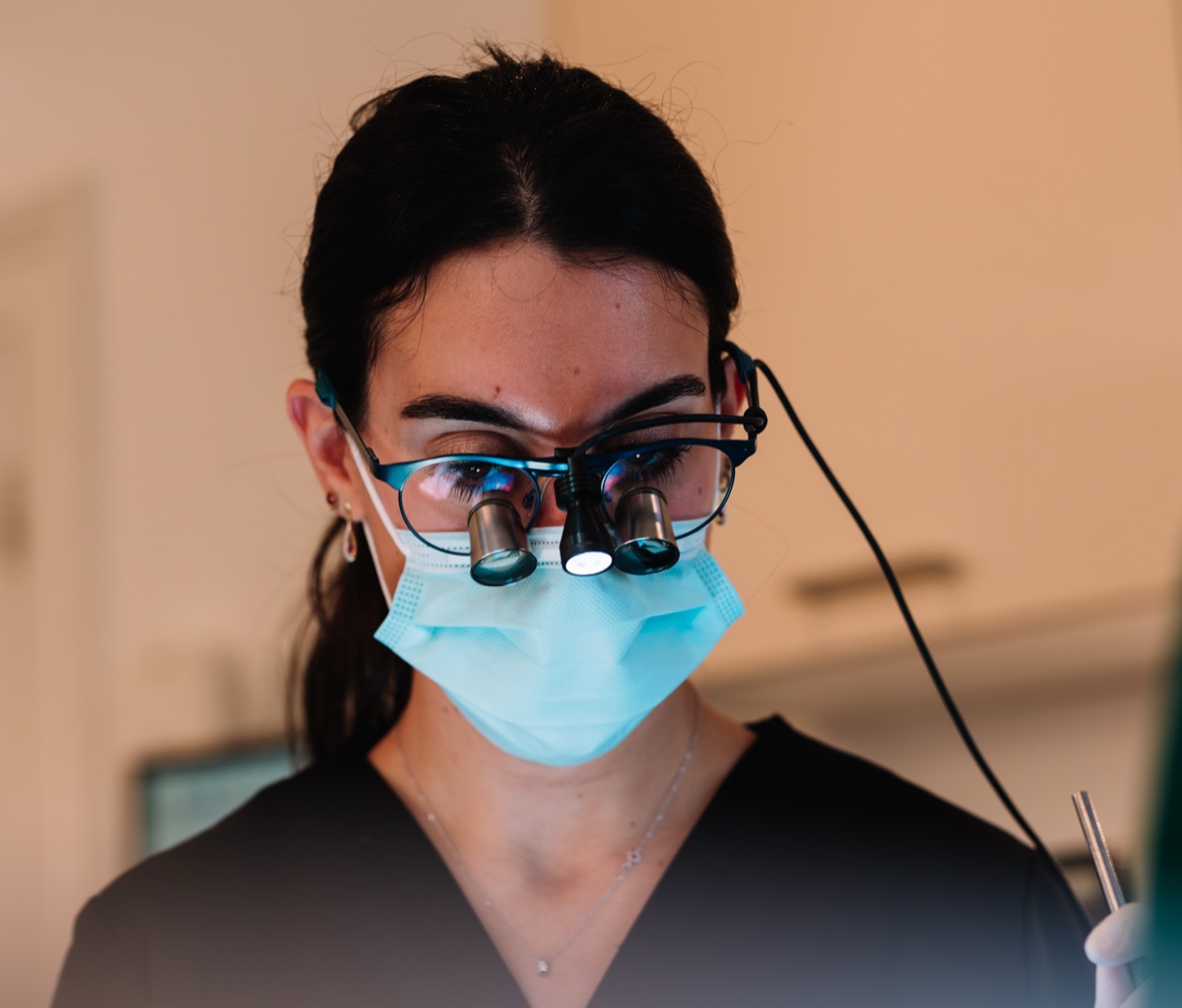
Diagnosing bruxism and TMJ disorders requires more than just a quick look at your teeth. At Behrens Dental Practice, we utilize high-powered microscopes to identify the microscopic wear patterns on enamel that indicate grinding long before a tooth cracks.
Understanding your treatment options can alleviate the anxiety of “what comes next.”
Phase 1: Stabilization and Protection
The immediate goal is to stop the damage and relieve pain. This usually involves a custom-made occlusal splint (night guard). Unlike store-bought versions, these are precision-engineered to fit your teeth exactly. They act as a barrier to protect your enamel, but more importantly, they are designed to slightly separate your jaws, allowing the overworked muscles to finally relax and “deprogram” from the grinding cycle.
Phase 2: Correction and Alignment
Once the pain is managed, we look at the “why.” Sometimes, a misaligned bite is the culprit—your teeth don’t fit together perfectly, causing your jaw to shift unnaturally to find a resting position. In these cases, correcting the bite is the long-term cure. This might involve restorative adjustments or moving the teeth into a harmonious position using clear aligners in South Kensington like Spark Aligners, which offer a discreet way to balance your bite without traditional braces.
Phase 3: Holistic Management
We believe in treating the whole patient. If periodontal inflammation is present due to the stress on your teeth, our team—including dentists with a special interest in periodontics—will manage the gum health to ensure a solid foundation. For some, incorporating relaxation techniques or working with a physiotherapist is a key part of the puzzle.
![A flowchart illustrating the patient journey from initial symptoms to diagnosis, treatment options (splints, aligners), and long-term maintenance.]
Actionable Steps: Take Control of Your Jaw Pain Today
While professional intervention is often necessary to break the cycle of bruxism, there are immediate steps you can take to reduce the strain on your jaw during your workday.
- The “N” Position: Throughout the day, check your tongue position. The tip of your tongue should rest gently on the roof of your mouth behind your upper front teeth (as if saying the letter “N”), with your teeth slightly apart. This is the physiological resting position for the jaw.
- Monitor Your Caffeine: Try to switch to decaf after 2:00 PM. The half-life of caffeine can keep your muscles jittery well into the night.
- Desk Ergonomics: Ensure your screen is at eye level. If you are looking down, your jaw is likely being pulled back, creating tension.
Can bruxism cause permanent damage?
Yes, if left untreated. Chronic grinding can wear down tooth enamel to the point where the inner layers of the tooth are exposed, leading to sensitivity. It can also cause gum recession and permanent changes to the shape of the jaw joint (osteoarthritis). Regular dental hygiene appointments in South Kensington allow us to spot these signs early.
I don’t wake up in pain, but my partner says I grind. Do I still need treatment?
Sleep bruxism acts like a silent erode. You may not feel pain because your body has adapted to the tension, but your teeth are still sustaining heavy forces. Prevention is always better (and less expensive) than cure; preventing a cracked tooth is far easier than replacing one with an implant.
Is Botox useful for jaw pain?
Botulinum toxin (Botox) can be used in specific cases to relax the masseter muscles (the main chewing muscles), reducing the force they can exert. It is not a cure, but it can be an effective meaningful adjunct therapy for managing acute pain while other solutions are implemented.
Moving Forward
You do not have to accept jaw pain as a mandatory side effect of a successful career. By understanding the mechanics of your jaw and the impact of your lifestyle, you can take steps to protect your smile and reclaim your comfort. Whether it’s a simple custom splint or a comprehensive review of your bite, the path to relief starts with a conversation.