
Managing jaw pain and teeth grinding in chelsea
If you wake up with a dull headache that radiates from your temples, or notice a tightness in your jaw before your morning coffee has even brewed, you aren’t alone. In the high-velocity professional environment of Chelsea, stress often finds a physical outlet, and for many, it manifests in the jaw. It is a silent symptom of the “London Grind”—a physiological response to the demands of city life that goes unnoticed until it becomes painful.
While many attribute these symptoms to poor sleep or staring at screens, they are often the hallmarks of bruxism (teeth grinding) or Temporomandibular Joint (TMJ) disorders. Addressing these issues requires more than just relaxation techniques; it requires a partnership with a provider who understands the intricacies of oral anatomy. Finding the right dentist / dental care in Chelsea is about connecting with a team that looks beyond the teeth to treat the functional harmony of the entire masticatory system.
The “London Grind” – More Than Just a Metaphor
For the driven professionals of Chelsea—from hedge fund managers to legal consultants—stress is often viewed as fuel for performance. However, your body has a different interpretation. When the brain is in a state of hyper-focus or low-level “fight or flight,” it triggers the masseter muscles (the large muscles at the side of your jaw).
This creates what we call the “Masseter Cycle.” Stress causes you to clench, which builds muscle strength. Stronger muscles then allow for even more powerful clenching, creating a feedback loop of tension. Unlike a workout where muscles get rest, bruxism often occurs during sleep, meaning your jaw is running a marathon while you are trying to recover.
Deciphering the Acronyms: Bruxism vs. TMD
It is common to hear these terms used interchangeably, but distinguishing them helps in understanding your treatment path:
- Bruxism is the action. It is the habitual grinding or clenching of teeth, often occurring subconsciously during sleep or intense concentration.
- TMD (Temporomandibular Disorders) is the result. This refers to problems with the jaw joint (TMJ) and the facial muscles that control it.
Think of your TMJ like the shock absorbers in a high-performance car. If you drive that car off-road every night (bruxism), eventually the suspension system (the joint) will become misaligned and damaged, leading to a “shaky ride” (TMD).
The Hidden Cost of “Toughing It Out”
Many patients ignore the initial clicking sounds or morning stiffness, assuming it is just a phase. However, untreated bruxism is destructive. It wears down enamel, leading to tooth sensitivity and a shortening of the teeth which can prematurely age the face.
From an aesthetic standpoint, chronic grinding leads to hypertrophy (enlargement) of the jaw muscles, creating a square, wider face shape that some find undesirable. From a functional standpoint, the immense pressure can shatter restorations. We often see patients who require repairs to dental crowns chelsea residents have invested in, simply because the ceramic could not withstand the nightly force of unchecked grinding.
Why Shop-Bought Guards Might Make It Worse
When patients realize they are grinding, a common impulse is to buy an over-the-counter “boil-and-bite” mouthguard. While this seems like a quick fix, it can often exacerbate the problem.
Generic guards are often soft and bulky. When you place a soft, chewy material between your teeth, the brain instinctively wants to chew on it. This can actually increase muscle activity during sleep, turning a protective measure into a gym session for your jaw.
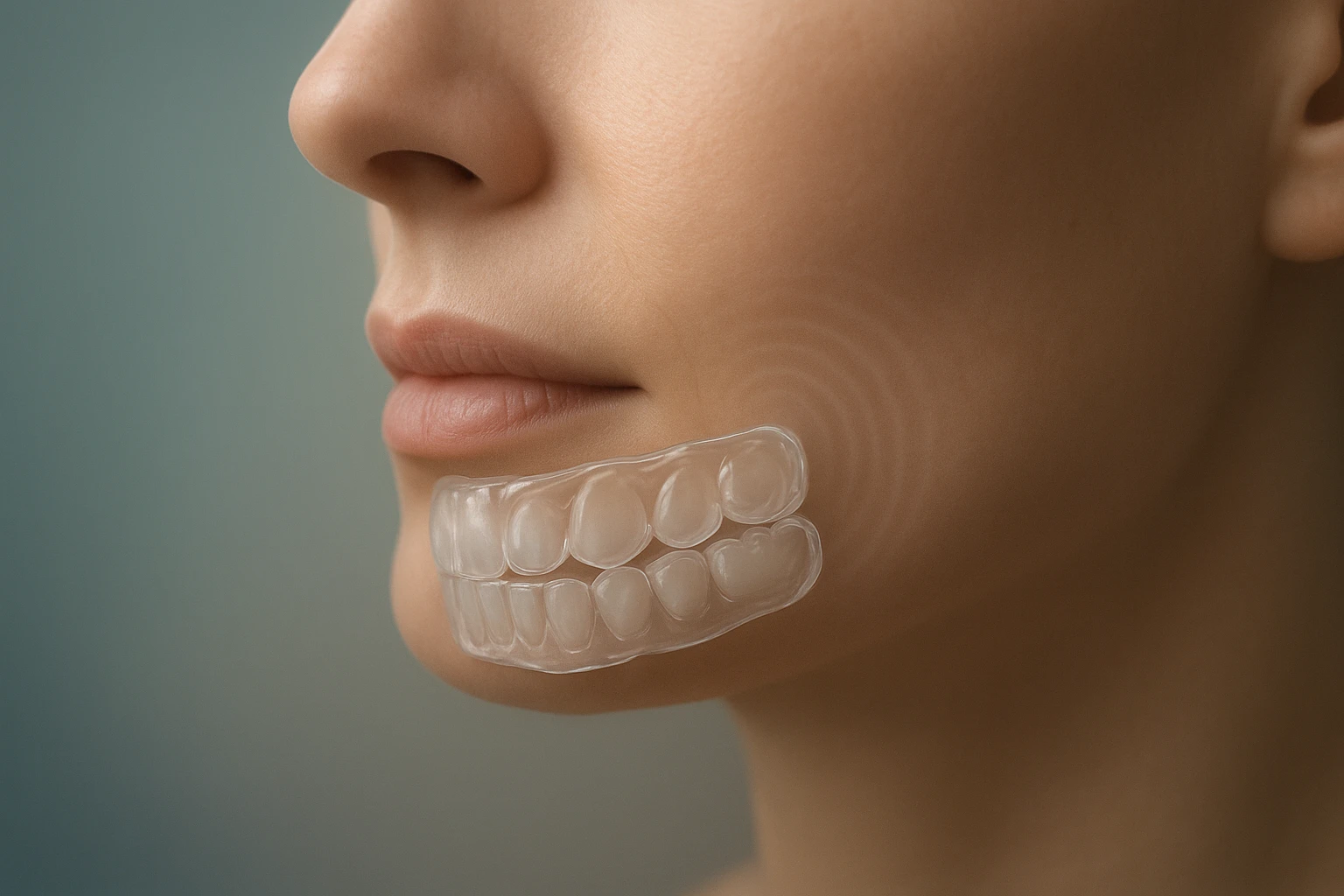
Professional management focuses on hard, custom-fitted splints (such as Michigan splints). These are precision-engineered to guide the jaw into a neutral position where the muscles can fully relax, breaking the feedback loop of pain.
The Role of Alignment and Orthodontics
Sometimes, the root cause of jaw pain isn’t just stress—it’s mechanics. If your teeth don’t fit together perfectly (malocclusion), your jaw has to shift constantly to find a comfortable resting position. This constant micro-adjustment fatigues the muscles.
In these cases, the solution may involve correcting the bite. While many adults hesitate at the thought of traditional orthodontics, modern solutions like the type of braces Chelsea professionals prefer (such as Spark Aligners) offer a discreet way to align teeth. By harmonizing the bite, we can often alleviate the strain on the TMJ significantly.
The Self-Check: Are You Grinding?
You might be grinding your teeth without realizing it. Here is a quick self-assessment to perform in the mirror:
- The Scalloped Tongue: Stick out your tongue. do you see ripple marks or indentations along the sides? This is caused by the tongue being pressed against the teeth during clenching.
- The Flat Line: Look at the tips of your front teeth. Are they jagged and natural, or do they look filed flat?
- The Morning Click: Open your mouth wide. Is there an audible pop or click, or a deviation to one side?
- Ear Fullness: Do you experience earaches or a feeling of fullness in the ear without an infection? The TMJ is located directly next to the ear canal.
Frequently Asked Questions
Can stress cause permanent damage to my teeth?
Yes. Chronic bruxism can wear down enamel to the point where the inner dentine is exposed, leading to sensitivity and an increased risk of decay. It can also cause gum recession and abfraction lesions (notches) at the gum line.
Is there a cure for TMJ disorders?
TMD is generally managed rather than “cured” in the traditional sense, similar to back pain. However, with the right combination of splint therapy, stress management, and occasionally treatments like Botox to relax the masseter muscles, the symptoms can be completely resolved for most patients.
I have a busy schedule. Can I get help on the weekend?
We understand that pain doesn’t adhere to business hours. For those needing a weekend dentist chelsea offers limited options, but our practice prioritizes accessibility for patients in pain or those with demanding schedules during the week.
Does insurance cover night guards?
Many private dental insurance plans do provide coverage for occlusal splints (night guards) as they are considered a preventative medical device. We recommend checking your specific policy details.
Taking the Next Step
Understanding the mechanics of your jaw pain is the first step toward relief. You do not have to accept morning headaches or damaged teeth as the cost of a successful career. By addressing the root cause—whether it is stress, alignment, or habit—you can protect your smile and improve your quality of life.
If you recognize yourself in these symptoms, the next logical step is a comprehensive evaluation to assess your jaw function and discuss a tailored approach to protection and relief.