

Private Periodontal Care and NHS Options in London
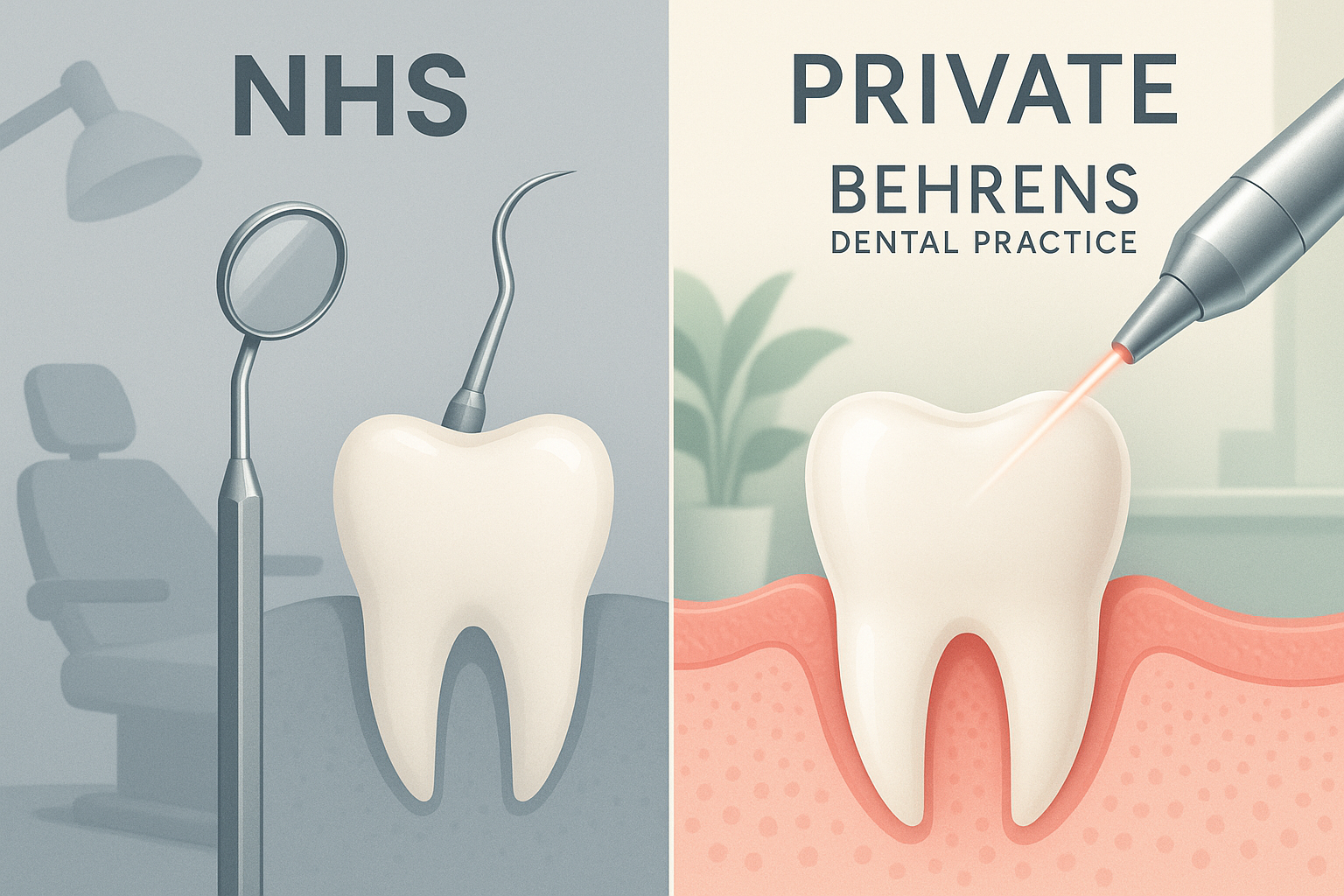
Have you ever noticed a little pink in the sink after brushing and thought, “It’s probably nothing”? It’s a common thought, but that small sign can be the first whisper of a much larger conversation your body is trying to have with you about your gum health.
For many Londoners, the next step is a visit to their dentist, which opens up a crucial question: What’s the right path for treatment? The familiar route of the NHS, or the world of private care? It can feel like standing at a crossroads without a map. On one hand, there’s a system designed to provide essential care for everyone. On the other, a bespoke approach promising advanced technology and personalised attention.
This isn’t just about choosing a periodontist; it’s about choosing a philosophy of care for a part of your health that’s foundational to your overall well-being. Let’s walk through this landscape together, transforming confusion into clarity and helping you make the most informed decision for your long-term health.
The Foundation: What Are We Actually Talking About?

Before we compare the paths, let’s agree on the destination: healthy gums. The primary threat is periodontal disease, a condition that begins quietly but can have serious consequences.
It’s an infection of the tissues that hold your teeth in place, and it unfolds in stages:
- Gingivitis: This is the early stage, often marked by red, swollen gums that bleed easily. The good news? It’s usually reversible with improved oral hygiene and professional cleaning.
- Periodontitis: If gingivitis is left untreated, it can advance to periodontitis. The gums pull away from the teeth, forming pockets that become infected. The body’s immune system fights the bacteria as the plaque spreads and grows below the gum line. If not treated, the bones, gums, and tissue that support the teeth are destroyed.
Understanding what is periodontal disease is the first step. The fundamental treatment for both NHS and private patients often starts with the same goal: removing the plaque and tartar buildup through a deep cleaning process called scaling and root planing. But from this shared starting point, the journeys can diverge significantly.
NHS Periodontal Care: The Essentials-First Approach
The National Health Service is a remarkable institution built on the principle of providing care based on clinical need. When it comes to periodontal treatment, the NHS focuses on getting your gums to a state of functional health.
What to Expect
- Treatment Scope: NHS care primarily covers treatments that are deemed “clinically necessary.” For gum disease, this typically includes assessments, oral hygiene instruction, and scaling and root planing (often split into multiple appointments).
- Focus: The goal is to stop the disease from progressing and to maintain a basic level of oral health.
- Access: You’ll be treated by a general dentist who provides NHS services. While they are skilled professionals, they may not have specialised training in advanced periodontics.
- Limitations: More complex, aesthetic, or technologically advanced treatments are generally not available. This includes advanced surgical procedures, cosmetic gum contouring, and cutting-edge therapies like laser treatment. Waiting times for appointments can also be a significant factor, potentially allowing the condition to worsen.
The NHS provides a crucial safety net. It ensures that everyone has access to essential care to fight gum disease. However, its “necessity-driven” model means the journey is often standardised, with less room for personalisation or access to the latest innovations.
The Private Advantage: A World Beyond Basic
Private periodontal care operates on a different philosophy: patient-centric, preventative, and comprehensive. It’s not just about stopping a problem; it’s about achieving optimal oral health, comfort, and aesthetics, both now and in the future.
This approach widens the lens, viewing your gums as part of a holistic system. The goal shifts from simply functional to truly thriving.

What Sets Private Care Apart?
- Time and Attention: One of the most significant differences is time. Private appointments are longer, allowing for in-depth discussion, thorough examination, and a more comfortable, unhurried treatment experience. Your dentist has the time to educate you fully on your condition and options.
- Expert Access: Private practices often have a team of dedicated experts under one roof. At Behrens, for instance, patients have access to dentists like Dr. Georgios Kolaitis, who holds a Master’s degree in Periodontics, ensuring you are treated by an expert in the field.
- Advanced Technology: Private practices invest heavily in cutting-edge equipment that can lead to more precise diagnoses and more effective, less invasive treatments.
- Broader Treatment Options: The full spectrum of modern dentistry is available. This includes treatments designed not only for health but also for aesthetics and long-term stability, such as regenerative procedures to rebuild lost bone and tissue.
Mastery: Behrens Dental Practice – The Pinnacle of Private Periodontal Care
To truly understand the difference, let’s move from the general concept of “private care” to a specific example of it in practice. At Behrens Dental Practice in South Kensington, the private advantage isn’t just a philosophy; it’s a tangible experience built on expertise, technology, and a deep commitment to patient well-being.
This is where the theoretical differences become real-world benefits.
The Behrens Difference: A Deeper Dive
- Unmatched Diagnostics: We believe you can’t treat what you can’t see. Dr. Behrens and his team use high-powered microscopes for examinations. This allows for incredibly precise diagnosis, identifying issues that would be missed by the naked eye and enabling treatment that is minimally invasive and maximally effective. This commitment to advanced technology is at the core of our practice.
- Pioneering Laser Therapy: Behrens Dental Practice is home to Duo-Lase™ periodontal treatment, a non-surgical laser therapy founded by Dr. Ole Behrens himself. This is a game-changer for patients. Unlike traditional surgical methods, this advanced laser gum treatment is less invasive, promotes faster healing, and is highly effective at targeting harmful bacteria without damaging healthy tissue. This is an option simply not available on the NHS.
- A Philosophy of Partnership: The reason why people choose Behrens Dental Practice is our patient-centric culture. We don’t just treat gums; we partner with our patients. Longer appointments are used for co-planning your treatment, educating you on preventative strategies, and ensuring every question you have is answered. It’s a collaborative approach to your health.
- Comprehensive In-House Expertise: From initial diagnosis with a periodontist to advanced surgical solutions like a gum graft in London if needed, all your care is coordinated under one roof. This integrated approach ensures seamless, high-quality treatment without the hassle of external referrals.
Making Your Choice: A Guide for London Patients
Deciding between NHS and private care is a personal choice based on your priorities, budget, and desired outcomes. Here are a few questions to ask yourself:
- What is my main goal? Is it to simply address a pressing clinical need, or am I looking for a long-term, preventative solution that also considers comfort and aesthetics?
- How important is time to me? Am I willing to wait for appointments, or do I prefer immediate access to care to prevent my condition from worsening?
- Am I interested in the latest treatment options? Does the idea of less invasive, technologically advanced care like laser therapy appeal to me?
- How do I view the cost? Do I see dental care as an expense to be minimised, or as an investment in my long-term health and confidence? While private care has an upfront cost, it can prevent more complex and expensive problems down the line.
Debunking the Cost Myth
A common misconception is that private care is prohibitively expensive. While it is an investment, many private practices, including Behrens, offer clear treatment plans and payment options to make it manageable. The value is found in the preventative nature of the care, the quality of materials, the expertise of the periodontal experts, and the superior long-term outcomes, which can save you from the significant physical and financial costs associated with the risks of periodontal disease left undertreated.
Long-Term Health: Maintenance and Beyond
Achieving healthy gums is the first step. Keeping them healthy is a lifelong journey. This is another area where the two paths diverge.
NHS follow-up care focuses on functional maintenance. In contrast, a private practice like Behrens implements a bespoke long-term maintenance plan. This includes regular visits with a hygienist who uses advanced tools, monitors your gum health with detailed charting, and provides personalised advice to prevent recurrence. It’s proactive, not just reactive.
Your gum health is too important to leave to chance. Choosing your care provider is the first and most critical step in protecting not just your smile, but your overall well-being.
Frequently Asked Questions
Can I mix and match NHS and private periodontal treatments?
It is recommended not to mix treatment between different practices.
How do the qualifications of private periodontists differ from general NHS dentists?
An NHS dentist is a highly skilled general practitioner. A private periodontist, like Dr. Kolaitis at our practice, has completed several years of additional, intensive training focused exclusively on gum disease, dental implants, and the supporting structures of the teeth. This specialised expertise is crucial for complex cases.
What are the long-term savings of choosing private over NHS care?
While the initial investment is higher, private care’s focus on prevention, superior technology, and specialist oversight can prevent the recurrence of disease. This helps you avoid more drastic and expensive future treatments like tooth extractions and implants, leading to significant long-term savings and better health outcomes.