
Non Surgical Periodontal Treatment in SW3
For the high-performing professional in London, time is often the most scarce resource. You manage a tight schedule, balancing boardroom meetings with family commitments, and your health strategy is usually focused on optimization and efficiency. However, when it comes to gum health, many people find themselves stuck in a frustrating cycle. You might notice bleeding while brushing or sensitivity that doesn’t go away, yet the traditional solutions offered seem archaic compared to the rest of your healthcare regimen.
The hesitation is understandable. Historically, addressing advanced gum issues meant a binary choice: ineffective “deep cleanings” that require constant repetition, or invasive gum surgery that necessitates days of downtime—something a busy calendar simply cannot accommodate. Fortunately, modern dentistry has evolved. For those seeking dentist and periodontal care in Chelsea, the landscape has shifted toward advanced, non-surgical interventions that prioritize both biological healing and schedule efficiency.
The “Surgery vs. Maintenance” Gap
If you have been told you have periodontal disease (gum disease), you may have felt paralyzed by the options presented to you. This is what we call the “Surgery vs. Maintenance” gap.
On one side, you have standard hygiene appointments. While excellent for prevention, standard scaling is often insufficient for treating active disease because it focuses on the surface. It’s like repainting a wall with a crack in it; it looks better temporarily, but the structural integrity is still compromised.
On the other side sits traditional osseous surgery—cutting the gum to access and clean the root. While effective, the recovery time, discomfort, and potential for gum recession make it a daunting prospect for client-facing professionals.
The “Aha!” moment comes when we realize that gum disease is not just a structural problem; it is a bacterial infection deeply embedded in the tissue. To treat it effectively without surgery, we don’t just need to clean the tooth; we need to change the biological environment of the mouth.
The Logic of Laser Decontamination
To understand why modern non-surgical treatments are revolutionizing gum health, we have to look at the microscopic level. Periodontal disease is caused by specific pathogens that colonize the space between the tooth and the gum, known as the periodontal pocket.
Traditional tools often cannot reach the bottom of deep pockets or kill bacteria embedded within the soft tissue walls. This is where advanced light energy changes the game.
The Duo-Lase™ Approach
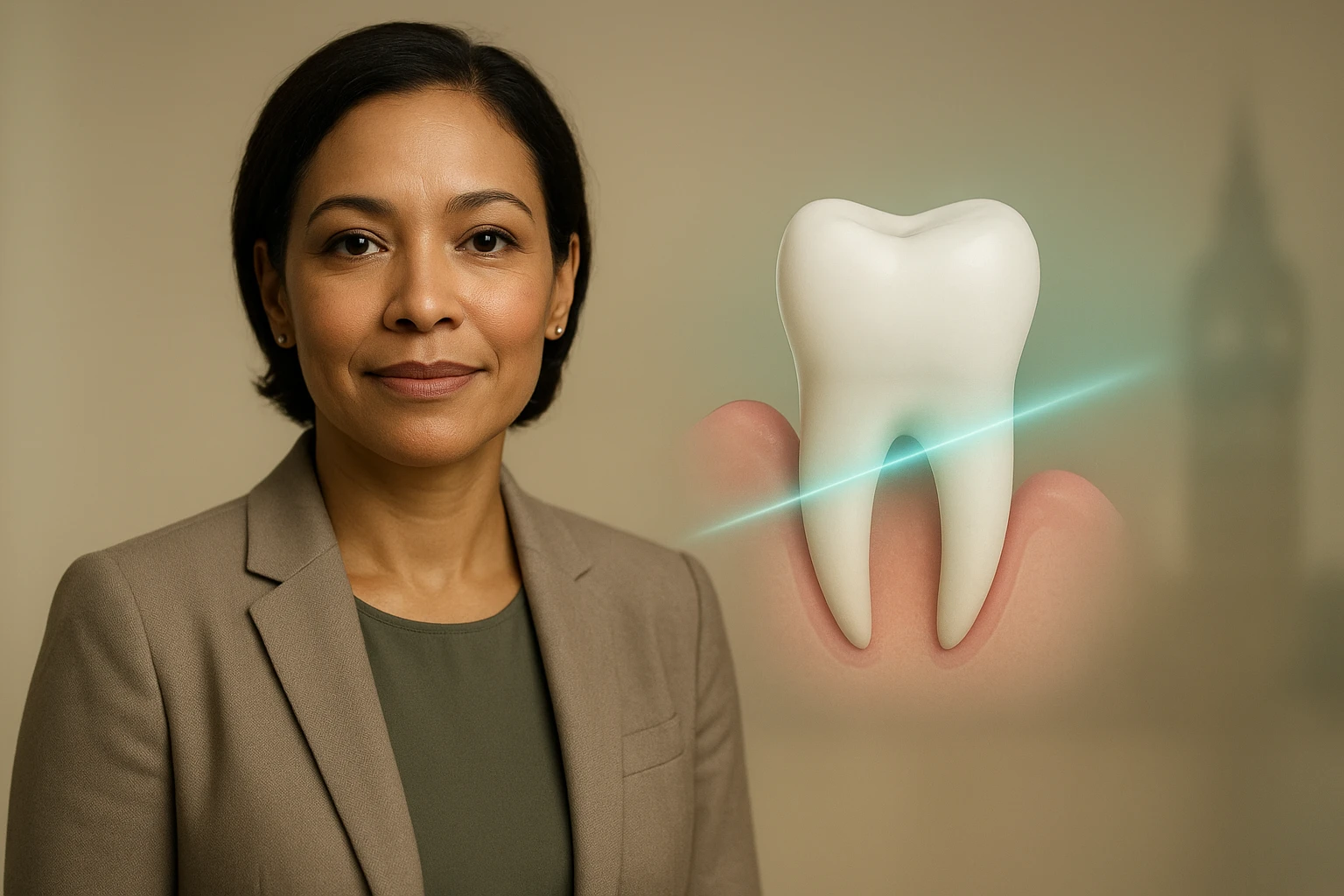
Cutting-edge protocols, such as the Duo-Lase™ treatment, utilize a specific logic that mimics the body’s own healing requirements. It’s not just about “zapping” the gums; it is a choreographed two-step process:
- The Decontamination Phase: A specific laser wavelength is used to target and vaporize the bacteria causing the infection. Think of this as the “reset” button. It selectively targets diseased tissue and pathogens while leaving healthy tissue harms-way.
- The Biostimulation Phase: A second wavelength is utilized to stimulate the body’s healing response. This energy penetrates the tissue to encourage collagen production and bone regeneration. It creates a sticky, biological seal between the gum and the tooth, effectively locking out future bacteria.
This dual approach explains why laser periodontal treatment in London is becoming the preferred choice for patients who want to address the root cause of the infection rather than just managing symptoms.
The ROI on Recovery: No Downtime
For residents of SW3, the return on investment (ROI) of medical treatments is often measured in “days lost.”
With traditional surgery, you are looking at stitches, swelling, dietary restrictions, and potential prescription painkillers. It is a disruption that requires clearing your diary.
In contrast, non-surgical laser protocols are designed for the modern lifestyle. Because the treatment is minimally invasive and promotes immediate clotting and sealing, the recovery profile is vastly different.
- Immediate Function: Most patients can return to work or social engagements immediately after the appointment.
- Reduced Sensitivity: Because there is no cutting or stitching, post-operative discomfort is significantly lower.
- Efficiency: Treatments are often completed in fewer visits than traditional surgical plans.
Can “Hopeless” Teeth Be Saved?
One of the most common misconceptions is that once a tooth is loose or the bone loss is significant, extraction and implants are the only options.
This is where the “biological seal” created by laser therapy becomes critical. By thoroughly decontaminating the area and stimulating regrowth, we frequently see teeth that were previously deemed “hopeless” firm up and remain functional for years. This is particularly relevant for patients who wish to retain their natural teeth for as long as possible.
However, success relies on precision. This is why treatments should ideally be performed under high-powered microscopes. You cannot treat what you cannot see. Microscopic dentistry allows the clinician to ensure that the root surface is perfectly clean before the laser helps seal the gum back in place.
Maintaining Your Investment
Once the disease is in remission and the biological seal is established, the goal shifts to protection. This doesn’t mean you are tethered to the dental chair forever, but it does require a shift in mindset from “repair” to “stewardship.”
Effective periodontal maintenance is the insurance policy on your treatment. Unlike a standard cleaning, these visits are diagnostic checks to ensure the bacterial load remains low and the gum attachment remains strong. For the busy professional, this peace of mind—knowing your oral health is stable—allows you to focus your energy back on your business and personal life.
Frequently Asked Questions
Is laser treatment painful?
Most patients report little to no discomfort during the procedure. Local anaesthetic is used to ensure you are completely comfortable, but because there is no cutting of the tissue, the “throbbing” pain associated with surgery is absent.
How do I know if I need this treatment?
If you have bleeding gums, persistent bad breath, loose teeth, or have been told you have “deep pockets” (spaces between the gum and tooth deeper than 3mm), you are likely a candidate. A microscopic examination is the best way to confirm diagnosis.
Is the treatment permanent?
Periodontal disease is a chronic condition, similar to diabetes or hypertension. While we can put the disease into remission and regenerate tissue, “cure” is a misleading term. Success depends on the quality of the treatment and your commitment to home care and maintenance visits.
Why haven’t I heard of this from my general dentist?
General dentistry focuses on a wide array of treatments. Advanced laser protocols like Duo-Lase™ require specialized equipment (lasers, microscopes) and advanced training that is typically found in practices with a specific focus on periodontal regeneration and high-tech dentistry.
The Next Step in Your Health Journey
Understanding that you have options beyond traditional surgery is the first step toward reclaiming your oral health. You do not need to choose between your schedule and your smile. By leveraging advanced technology, you can address gum disease with the precision and efficiency your lifestyle demands.
If you suspect your gum health needs attention, look for a practice that prioritizes diagnostics and education. Seeing your own situation through a microscope can be an enlightening experience, transforming vague anxiety into a clear, actionable plan.